Choose your country or region.

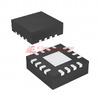
16-VQFN(exposed-pad).jpg ImageView larger image
Image may be representation.
See specs for product details.

PCA9534RGVR

In Stock 34457 pcs Reference Price(In US Dollars)
1+
$1.8255
10+
$1.5429
30+
$1.3674
100+
$1.1861
500+
$1.1048
1000+
$1.0691
Manufacturer Part Number:
PCA9534RGVR
Manufacturer / Brand
Texas Instruments
Part of Description:
IC XPNDR 400KHZ I2C SMBUS 16VQFN
Datasheets:
PCA9534RGVR(1).pdfPCA9534RGVR(2).pdfPCA9534RGVR(3).pdf
Lead Free Status / RoHS Status:
ROHS3 Compliant
Stock Condition:
New original, 34457 pcs Stock Available.
ECAD Model:
Ship From:
Hong Kong
Shipment Way:
DHL/Fedex/TNT/UPS

Inquiry Online

Please complete all required fields with your contact information.Click "SUBMIT REQUEST" we will contact you shortly by email. Or Email us: Info@IC-Components.com
Part Number
Manufacturer
Require Quantity
Target Price(USD)
Company Name
Contact Name
E-mail
Phone
Message
Please enter Verify Code and click "Submit"
Part Number PCA9534RGVR
Manufacturer / Brand Texas Instruments
Stock Quantity 34457 pcs Stock
Category Integrated Circuits (ICs) > Interface - I/O Expanders
Description IC XPNDR 400KHZ I2C SMBUS 16VQFN
Lead Free Status / RoHS Status: ROHS3 Compliant
RFQ PCA9534RGVR Datasheets PCA9534RGVR Details PDF
PCA9534RGVR Details PDF for FR.pdf
PCA9534RGVR Details PDF for IT.pdf
PCA9534RGVR Details PDF for ES.pdf
PCA9534RGVR Details PDF for DE.pdf
PCA9534RGVR Details PDF for KR.pdf
Voltage - Supply 2.3V ~ 5.5V
Supplier Device Package 16-VQFN (4x4)
Series -
Package / Case 16-VQFN Exposed Pad
Package Tape & Reel (TR)
Output Type Push-Pull
Operating Temperature -40°C ~ 85°C
Number of I/O 8
Mounting Type Surface Mount
Interrupt Output Yes
Interface I²C, SMBus
Features POR
Current - Output Source/Sink 10mA, 25mA
Clock Frequency 400 kHz
Base Product Number PCA9534

Packaging & ESD

Industry-standard static shielding packaging is used for electronic components.Anti-static, light-transparent materials allow easy identification of ICs and PCB assemblies.
The packaging structure provides electrostatic protection based on Faraday cage principles.This helps protect sensitive components from static discharge during handling and transportation.


All products are packed in ESD-safe anti-static packaging. Outer packaging labels include part number, brand, and quantity for clear identification. Goods are inspected prior to shipment to ensure proper condition and authenticity.

ESD protection is maintained throughout packing, handling, and global transportation. Secure packaging provides reliable sealing and resistance during transit. Additional cushioning materials are applied when required to protect sensitive components.

QC(Part Testing by IC Components)Quality Warranty

We can offer worldwide express delivery service, such as DHLor FedEx or TNT or UPS or other forwarder for shipment.

Global Shipment by DHL/FedEx/TNT/UPS

Shipping Fees reference DHL/FedEx
1). You can offer your express delivery account for shipment, ifyou haven’t any express account for shipment, we can offer our account inadvance.
2). Use our account for shipment, Shipment charges(Reference DHL/FedEx, Different Countries has different price.)
Shipment charges: (Reference DHL and FedEX)
Weight(KG): 0.00kg-1.00kg Price(USD$) : USD$60.00
Weight(KG): 1.00kg-2.00kg Price(USD$) : USD$80.00
* The price of cost is reference with DHL/FedEx. The detail charges, please contact us. Different country the express charges are different.


We accept the payment terms: Telegraphic Transfer(T/T), Credit Card, PayPal and Western Union.

PayPal:

PayPal Bank Information:
Company Name : IC COMPONENTS LTD
Paypal ID: PayPal@IC-Components.com

BANK TRANSFAR (Telegraphic Transfer)

Payment For Telegraphic Transfers:
Company Name : IC COMPONENTS LTD Beneficiary Account Number : 549-100669-701
Beneficiary Bank name : Bank of Communications (Hong Kong) Ltd Beneficiary Bank Code : 382 (for local payment)
Beneficiary Bank SWIFT : COMMHKHK
Beneficiary Bank Address : Tsuen Wan Market Street Branch 53 Market Street, Tsuen Wan N.T., Hong Kong

Any inquires or questions, please kindly contact us Email: Info@IC-Components.com


PCA9534RGVR Product Details:

The PCA9534RGVR is a versatile I/O expander IC (Integrated Circuit) manufactured by Luminary Micro / Texas Instruments. Designed for SMBus (System Management Bus) communication, this device offers eight general-purpose input/output (GPIO) pins that can be configured individually as inputs or outputs.

The PCA9534RGVR is categorized as an Interface - I/O Expander, a type of integrated circuit that extends the number of available input/output ports on a system. This device is well-suited for applications where additional control or sensing capabilities are required, such as in industrial automation, consumer electronics, and embedded systems.

The key features of the PCA9534RGVR include support for a 400kHz SMBus interface, a push-pull output configuration, and a wide operating temperature range of -40°C to 85°C. It is housed in a compact 16-VQFN (4x4) package with an exposed pad for enhanced thermal performance.

The primary advantages of the PCA9534RGVR include its ability to expand the I/O capabilities of a host system, its SMBus communication interface, and its wide temperature range, making it suitable for a variety of operating environments. The device is also RoHS-compliant, ensuring it meets the necessary environmental regulations.

The PCA9534RGVR can be used in a wide range of applications, such as industrial automation, consumer electronics, and embedded systems, where additional input/output capabilities are required. It can be used to control and monitor various peripheral devices, sensors, and actuators.

Regarding equivalent models, there are several alternative I/O expander ICs available from Texas Instruments and other manufacturers that may provide similar functionality. Some potential equivalent models include the PCA9535, PCA9536, and PCF8574 series from Texas Instruments, as well as the MCP23008 and MCP23017 from Microchip Technology.

PCA9534RGVR Key Technical Attributes

Manufacturer Part Number: PCA9534RGVR

Manufacturer: Luminary Micro / Texas Instruments

Main Category: Integrated Circuits (ICs)

Small Classification: Interface - I/O Expanders

PCA9534RGVR Packing Size

Package Type: 16-VQFN (4x4) Exposed Pad

Package Material: QFN

Package Configuration: 16-pin configuration

Thermal Characteristics: Capable of operating in temperatures ranging from -40°C to 85°C

Electrical Characteristics: Voltage - Supply 2.3 V ~ 5.5 V, Clock Frequency 400 kHz

PCA9534RGVR Application

Designed for use in expanding I/O capabilities through SMBus Interface in applications like embedded systems, server management, and other digital communication systems requiring additional I/O ports.

PCA9534RGVR Features

The PCA9534RGVR is an I/O expander for the SMBus/I2C-bus, providing 8-bit, general-purpose input/output (GPIO) expansion for SMBus/I2C applications. It operates at clock frequencies up to 400 kHz with a voltage supply range from 2.3 V to 5.5 V. The device supports interrupt output for input change notification enabling prompt response by a controller. Furthermore, it features Power-on reset (POR), which enhances the reliability and correct operation of outputs during power-up.

PCA9534RGVR Quality and Safety Features

Moisture Sensitivity Level (MSL) of 2, ensuring a shelf life of at least 1 year under proper storage conditions. The product adheres to RoHS compliance, procuring a lead-free and environmentally safe component. It is designed with a 16-VQFN package favorable for efficient heat dissipation and space management on PCBs.

PCA9534RGVR Compatibility

This device communicates through an SMBus interface, ensuring compatibility with most microcontrollers equipped with SMBus or I2C interfaces. It integrates seamlessly into a variety of digital circuits, enhancing PCB layout flexibility due to its minimalistic small form factor.

PCA9534RGVR Datasheet PDF

Our website hosts the most authoritative datasheet for the PCA9534RGVR, guaranteeing you precise and comprehensive product specifications and application guidelines. We recommend downloading the datasheet from the current page to ensure you have all the requisite details for utilization and integration of the product.

Quality Distributor

IC-Components is recognized as a premium distributor for Luminary Micro / Texas Instruments products. We ensure top-quality components and excellent customer service. Visit our website to get a quote and experience seamless purchasing of the PCA9534RGVR along with trustworthy and prompt delivery services.

Frequently Asked Questions

I'm designing a new embedded system requiring more GPIO pins than my microcontroller offers. Can the PCA9534RGVR be directly interfaced with a 3.3V microcontroller, and what are the critical considerations for ensuring reliable communication at its 400kHz SMBus interface?
Yes, the PCA9534RGVR is designed to operate from 2.3V to 5.5V, making it directly compatible with 3.3V microcontrollers. For reliable 400kHz SMBus communication, ensure proper bus capacitance is within specified limits. Use short trace lengths and consider adding series termination resistors on the SCL and SDA lines if the bus length exceeds a few inches, particularly in noisy environments. The output voltage of the microcontroller's I2C pins should be within the 2.3V to 5.5V range expected by the PCA9534RGVR.
My existing design uses the PCA9534 for I/O expansion, and we need to migrate to a new PCB layout with tighter spacing. Is the PCA9534RGVR a direct drop-in replacement for other PCA9534 variants in a 16-VQFN (4x4) package, and what are the implications for footprint compatibility and pin mapping?
The PCA9534RGVR is a specific variant of the PCA9534. If your current design uses another PCA9534 in a 16-VQFN (4x4) package with the same pinout, the PCA9534RGVR should be a direct drop-in replacement from a physical footprint perspective. However, always verify the datasheet for pin-to-pin compatibility. The "RGVR" designation typically refers to the tape and reel packaging, so the electrical functionality of the core PCA9534 device should be identical, provided you are replacing it with the same base part number.
I'm concerned about the long-term reliability of the PCA9534RGVR in an industrial environment where operating temperatures can fluctuate between -20°C and 70°C, though the datasheet specifies -40°C to 85°C. Are there any specific derating requirements or operational considerations I should be aware of for continuous use within this range?
The specified operating temperature range of -40°C to 85°C for the PCA9534RGVR indicates robust design for industrial applications. Operating within the -20°C to 70°C range should not require significant derating. However, ensure adequate thermal management for the 16-VQFN package, especially if all 8 I/Os are actively switching significant current (up to 25mA sink). If operating near the upper end of your expected range (70°C) with high I/O activity, consider heatsinking or airflow to prevent exceeding the junction temperature limits.
We are looking for an alternative to a competitor's 8-bit I/O expander (e.g., MCP23017) for our new product, prioritizing ease of integration and a wide operating voltage range. How does the PCA9534RGVR compare in terms of power consumption and typical use cases where it might be preferred over other SMBus/I2C I/O expanders?
The PCA9534RGVR offers an attractive combination of a wide supply voltage range (2.3V to 5.5V) and a power-on reset (POR) feature, simplifying startup sequences. Compared to some other I/O expanders, the PCA9534RGVR generally exhibits competitive power consumption. It is particularly well-suited for applications where interfacing with both 3.3V and 5V logic levels is required without level shifting, and where a simpler 8-bit expansion is sufficient. Its 400kHz SMBus speed is standard for many microcontrollers.
My design requires the I/O pins of the PCA9534RGVR to drive LEDs directly. What are the practical limitations regarding the output current sourcing and sinking capabilities (10mA/25mA) when driving multiple LEDs simultaneously from this device?
The PCA9534RGVR can source up to 10mA and sink up to 25mA per pin. When driving multiple LEDs, the total current drawn from or pushed to the device must not exceed these limits per pin, and it's wise to also consider the total current capability of the IC to avoid overheating. For instance, if you need to drive 8 LEDs, each requiring 20mA, the PCA9534RGVR would not be suitable for driving all of them simultaneously from a single pin due to the 25mA sink limit. You would need to either use fewer LEDs per pin, select LEDs with lower current requirements, or use external driver circuitry.
I need to implement a system where the I/O expander can signal the main processor when an event occurs, without the processor constantly polling. Does the PCA9534RGVR's interrupt output feature facilitate this, and what are the typical integration scenarios for this functionality?
Yes, the PCA9534RGVR features an interrupt output, which is ideal for event-driven signaling. This allows the expander to assert the interrupt pin when a change is detected on one of its configured input pins. This significantly reduces CPU load as the processor only needs to respond when an interrupt is asserted, rather than periodically polling the I/O status. Typical integration scenarios include button presses, sensor threshold crossings, or status changes from peripheral devices connected to the PCA9534RGVR. The interrupt can be configured as active-high or active-low and can be masked.
We are experiencing intermittent communication failures with our current I2C-based I/O expanders in a noisy electrical environment. Are there any specific design considerations for the PCA9534RGVR's SMBus interface that can help mitigate noise susceptibility in harsh conditions?
To mitigate noise susceptibility with the PCA9534RGVR's SMBus interface in noisy environments, several design considerations are crucial. Proper grounding and shielding of the PCB are paramount. Keep the SMBus traces as short as possible and away from high-current switching paths or noisy components. Employ small, low-inductance bypass capacitors close to the PCA9534RGVR's VCC pin. While the PCA9534RGVR supports 400kHz, ensuring bus integrity with careful layout is key. Adding series resistors (e.g., 10-33 ohms) on SDA and SCL lines can also help dampen reflections and reduce susceptibility to external noise, though this may slightly reduce the maximum achievable clock speed.
I'm considering the PCA9534RGVR for a battery-powered application where minimizing power consumption is critical. What is the typical current draw of the PCA9534RGVR in standby mode versus active operation with all I/Os configured as outputs?
The PCA9534RGVR is generally a low-power device. In standby or when all I/Os are configured as inputs and not switching, its current draw is very minimal, often in the microampere range. When configured as outputs and actively driving loads, the current consumption will increase proportionally to the number of active outputs and the current they sink or source. For precise power consumption figures in specific operating modes, consult the detailed datasheet specifications for quiescent current and current consumption during bus activity. The wide operating voltage range also aids power efficiency as it allows operation from lower voltage rails when possible.
My microcontroller has limited flash memory and I'm looking for an I/O expander that requires minimal configuration overhead. Does the PCA9534RGVR offer any built-in configuration features or simplified initialization routines that reduce software complexity, such as power-on default states?
Yes, the PCA9534RGVR features a Power-On Reset (POR) circuit. Upon power-up, the device initializes to a known default state, typically with all I/O pins configured as inputs. This greatly simplifies the initialization sequence in your microcontroller firmware, as you may not need to explicitly write configuration registers immediately after power-on. You can then proceed to configure the pin directions and output states as needed. This built-in POR simplifies the initial boot-up and reduces the code footprint required for device initialization.
We are replacing an older I/O expander in a legacy system that uses a 5V logic interface and operates at 100kHz. Can the PCA9534RGVR be safely used in this scenario, and what are the potential risks or adjustments needed when migrating from a 5V tolerant input to the PCA9534RGVR's specified voltage range?
The PCA9534RGVR can operate with a 5V supply and its SMBus/I2C interface is generally 5V tolerant, meaning it can be safely used in a 5V system. While it supports up to 400kHz, it will function correctly at 100kHz. The main consideration when migrating from a purely 5V system is ensuring that all signals connected to the PCA9534RGVR's I/O pins operate within its specified input voltage range (2.3V to 5.5V) when used as inputs. If your legacy system uses GPIOs that are strictly 5V output and you intend to connect them to the PCA9534RGVR's inputs, this is generally acceptable. However, if the microcontroller driving the bus is a 5V device, ensure its I2C/SMBus pins are compatible with the PCA9534RGVR's input voltage levels.

Recent Reviews

Leave Comment
Hello, you have not logged in, please log in
User Login

Forgot password?

No account yet? Register now

Tips
Please speak legally
Your email will be hidden
Please complete all required fields ( denoted with* )
Mark
5.0

You May Also Be Interested In:


PCA9534RGVR

PCA9534RGVR

Texas Instruments

IC XPNDR 400KHZ I2C SMBUS 16VQFN

In Stock: 34457

SUBMIT RFQ