


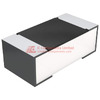
The Samsung Electro-Mechanics RCS1005F3924CS is a thick film chip resistor designed for compact circuit applications requiring high resistance values and environmental durability. This 0402 (1005 Metric) surface mount component delivers 3.92 megohms resistance with ±1% tolerance, positioning it for precision analog circuits, voltage dividers, and high-impedance signal conditioning networks where stable resistance values must be maintained across varying environmental conditions.
With a power rating of 0.063W (1/16W), this resistor suits low-power applications typical of portable electronics, sensor interfaces, and battery-operated devices. The thick film construction provides reliable performance characteristics while maintaining cost-effectiveness for volume production. The ±100ppm/°C temperature coefficient ensures resistance stability across the -55°C to 155°C operating range, making this component suitable for industrial temperature requirements and automotive electronics where thermal cycling occurs regularly.
The RCS1005F3924CS incorporates anti-sulfur and moisture resistant features that extend operational life in challenging environments. Anti-sulfur construction prevents the degradation that occurs when sulfur-containing compounds react with silver-based terminations, a failure mode commonly observed in industrial settings with rubber gaskets, fossil fuel combustion byproducts, or certain packaging materials. The moisture resistant design minimizes resistance drift and maintains electrical integrity in humid conditions, reducing field failures in outdoor equipment, HVAC systems, and marine applications.
The 0402 package measures 1.00mm × 0.50mm with a maximum seated height of 0.40mm, enabling high-density PCB layouts where board real estate is constrained. This footprint supports miniaturization initiatives in smartphones, wearables, IoT devices, and medical implantables. The two-terminal configuration simplifies automated pick-and-place assembly, while tape and reel packaging streamlines high-volume manufacturing processes.
RoHS3 compliance and REACH unaffected status confirm this resistor meets current environmental regulations for lead-free manufacturing and restricted substance management. The MSL 1 rating indicates unlimited floor life after package opening, eliminating moisture-related handling constraints and simplifying production scheduling. With active product status in the RCS series, the RCS1005F3924CS provides supply chain continuity for new designs and ongoing production requirements.
When a specific resistor model becomes unavailable due to supply chain constraints, end-of-life transitions, or cost optimization needs, identifying functionally compatible alternatives becomes necessary. The Samsung Electro-Mechanics RCS1005F3924CS represents a precision 3.92 MΩ thick film resistor in 0402 packaging with anti-sulfur and moisture resistant properties, commonly deployed in high-impedance sensing circuits, precision voltage dividers, and analog front-end applications where environmental durability matters.
Several manufacturers offer direct equivalents or closely matched alternatives to the RCS1005F3924CS. Among these options are the Yageo
RC0402FR-073M92L
, Panasonic ERJ-2RKF3924X, Vishay
 RC0402FR-073M92L
YAGEO
RES 3.92M OHM 1% 1/16W 0402
50000000
CRCW04023M92FKED
, KOA Speer
 CRCW04023M92FKED
Vishay Dale
RES SMD 3.92M OHM 1% 1/16W 0402
28701
RK73H1ETTP3924F
, and Bourns CR0402-FX-3924ELF. Each provides 3.92 MΩ resistance in the same 0402 form factor, though they differ in temperature coefficient specifications, environmental protection features, and manufacturing tolerances that affect suitability for specific circuit topologies.
 RK73H1ETTP3924F
KOA Speer Electronics, Inc.
RES 3.92M OHM 1% 1/10W 0402
20000000
Understanding the Original Component Characteristics
The RCS1005F3924CS belongs to Samsung's RCS series of chip resistors, designed for applications requiring stable high-resistance values under variable environmental conditions. The 3.92 MΩ resistance value positions this component in the upper range of standard thick film resistor offerings, where parasitic effects and leakage currents become increasingly relevant to circuit performance.
The 0402 (1005 metric) package measures 1.00mm × 0.50mm × 0.40mm, making it suitable for high-density PCB layouts where board space is constrained. Power dissipation is rated at 0.063W (1/16W), which limits current flow to approximately 127 µA at rated power. The ±1% tolerance provides adequate precision for most voltage division and bias network applications without requiring hand-selected components.
Temperature coefficient specification of ±100ppm/°C indicates resistance drift of up to 1% across a 100°C temperature swing. For circuits operating across the full -55°C to 155°C range, this translates to potential resistance variation of ±2.1% beyond the initial tolerance. Anti-sulfur and moisture resistant construction addresses reliability concerns in industrial environments where atmospheric contaminants or humidity could otherwise cause contact degradation or dendrite formation.
The thick film construction uses ruthenium-based resistive paste screen-printed onto alumina substrate. This manufacturing approach provides cost-effective production while maintaining adequate stability for general-purpose applications. Unlike thin film alternatives, thick film resistors exhibit slightly higher noise characteristics but offer broader resistance range availability and better surge handling capability.
Yageo RC0402FR-073M92L as Direct Cross-Reference
Yageo's
RC0402FR-073M92L
provides dimensional and electrical equivalence to the Samsung original. The part maintains 3.92 MΩ ±1% specification in identical 0402 packaging with 1/16W power rating. Temperature coefficient matches at ±100ppm/°C, ensuring comparable drift performance across operating temperature range.
RC0402FR-073M92L
YAGEO
RES 3.92M OHM 1% 1/16W 0402
50000000
The RC series from Yageo utilizes standard thick film technology with similar ruthenium oxide paste formulation. Moisture sensitivity level is rated MSL-1, allowing unlimited floor life after package opening, which simplifies inventory management in manufacturing environments. Operating temperature range spans -55°C to 155°C, directly matching the Samsung specification without thermal deration requirements.
Where this alternative diverges is in environmental protection features. The
RC0402FR-073M92L
does not explicitly specify anti-sulfur construction. For applications in industrial settings with elevated sulfur dioxide concentrations—such as petroleum processing facilities, coal-fired power generation environments, or chemical manufacturing plants—this omission may introduce long-term reliability risk. Sulfur-bearing compounds can penetrate through external termination layers and react with silver-bearing electrode materials, causing contact resistance increase or complete open circuit failure over multi-year deployment periods.
RC0402FR-073M92L
YAGEO
RES 3.92M OHM 1% 1/16W 0402
50000000
Voltage coefficient effects remain comparable between both parts. At 3.92 MΩ, voltage-induced resistance changes typically emerge below 0.1% for applied voltages under 50V, which covers most analog signal conditioning applications. Maximum working voltage calculates to approximately 160V based on power dissipation limits, though practical circuit voltage should remain well below this threshold to maintain reliability margins.
Panasonic ERJ-2RKF3924X with Enhanced Temperature Performance
The Panasonic ERJ-2RKF3924X presents a specification-matched alternative with refined temperature coefficient characteristics. While maintaining 3.92 MΩ ±1% tolerance and 0402 form factor, this component offers ±100ppm/°C temperature coefficient typical performance, with tighter distribution around the nominal value compared to standard thick film process.
Panasonic's ERJ-2R series incorporates proprietary resistive paste formulation and laser trimming methodology that reduces resistance drift across thermal cycling. For circuit designs where temperature-induced gain variation must be minimized—such as precision instrumentation amplifiers or low-drift voltage references—this improved coefficient distribution translates to more predictable output stability without requiring temperature compensation circuitry.
Power rating remains at 0.063W with standard deration curve requiring 50% power reduction at 70°C ambient. The component supports full -55°C to 155°C operation but maintains optimal stability within -10°C to 85°C range where most commercial electronics operate. Surge handling capability meets industry standard pulse load specifications, withstanding 2.5× rated power for 5-second duration without permanent resistance shift.
The ERJ-2RKF3924X does not explicitly advertise anti-sulfur protection, positioning it similarly to the Yageo alternative in terms of environmental resistance. However, Panasonic's electrode termination uses nickel barrier layer with tin overplate, which provides baseline resistance to atmospheric corrosion in typical electronics assembly environments. Applications requiring validated anti-sulfur performance should incorporate additional qualification testing when substituting this part for the Samsung original.
Vishay CRCW04023M92FKED for Automotive-Grade Applications
Vishay's
CRCW04023M92FKED
extends basic electrical equivalence with additional qualification pedigree suitable for automotive electronics. The part maintains 3.92 MΩ ±1% specification in 0402 packaging with 1/16W rating, but adds AEC-Q200 qualification for components deployed in vehicular environments subject to mechanical vibration, thermal shock, and extended temperature exposure.
CRCW04023M92FKED
Vishay Dale
RES SMD 3.92M OHM 1% 1/16W 0402
28701
Temperature coefficient specification matches at ±100ppm/°C with operating range expanded to -55°C to 155°C junction temperature. The automotive qualification includes additional testing for temperature cycling (1000 cycles, -55°C to 155°C), mechanical shock (1500g), and vibration resistance (20g, 10-2000 Hz), which exceeds standard consumer electronics requirements. For industrial control systems, aerospace instrumentation, or other high-reliability applications, this added qualification reduces deployment risk even when automotive environment is not present.
The CRCW series employs thick film technology with enhanced electrode adhesion process. Termination finish uses nickel barrier with matte tin overcoat optimized for lead-free soldering. Moisture sensitivity remains MSL-1 with JEDEC J-STD-020 compliant reflow profile supporting peak temperature to 260°C for 10 seconds. This thermal tolerance accommodates multiple reflow passes during PCB assembly without resistance shift or mechanical damage.
Environmental protection includes standard moisture resistance but does not explicitly specify anti-sulfur construction. The nickel barrier layer provides moderate protection against atmospheric contaminants, suitable for controlled manufacturing environments but requiring additional evaluation for harsh industrial deployment. Voltage coefficient and noise characteristics align with standard thick film behavior, making this alternative suitable for general analog circuits without specialized low-noise requirements.
KOA Speer RK73H1ETTP3924F with Tight Tolerance Distribution
The KOA Speer
RK73H1ETTP3924F
offers 3.92 MΩ resistance in 0402 packaging with 1% tolerance and ±100ppm/°C temperature coefficient matching the Samsung specification. This component distinguishes itself through tighter actual tolerance distribution achieved through enhanced manufacturing process control and automated optical inspection.
RK73H1ETTP3924F
KOA Speer Electronics, Inc.
RES 3.92M OHM 1% 1/10W 0402
20000000
While specified at ±1% tolerance, production data indicates actual distribution centers near ±0.5% for the RK73H series, with statistical outliers rarely exceeding ±0.75%. For voltage divider networks or gain-setting applications where resistor matching affects circuit accuracy, this tighter distribution reduces the need for component selection or trimming procedures. Batch-to-batch variation also shows improved consistency, simplifying procurement when circuit boards are manufactured across extended production runs.
Power rating maintains 0.063W specification with standard thick film deration characteristics. Operating temperature spans -55°C to 155°C with moisture sensitivity level MSL-1. The RK73H series uses standard three-layer termination structure: copper barrier, nickel intermediate layer, and tin-lead or lead-free tin finish depending on RoHS requirements. This construction provides adequate solder joint reliability for standard PCB assembly processes.
Environmental resistance includes moisture protection per MIL-STD-202 Method 106 but does not specify anti-sulfur capability. The component suits indoor electronics applications or environmentally controlled installations but requires additional testing for industrial environments with corrosive atmospheric conditions. Noise performance aligns with typical thick film characteristics, producing Johnson-Nyquist thermal noise plus excess low-frequency noise approximately 0.1 µV per volt across typical signal bandwidths.
Bourns CR0402-FX-3924ELF with Flexible Termination
Bourns CR0402-FX-3924ELF provides 3.92 MΩ ±1% specification in 0402 form factor with unique flexible termination construction. This design approach incorporates slightly compliant electrode structure that absorbs mechanical stress from PCB flexing or thermal expansion mismatch, reducing crack propagation risk in high-vibration or thermal cycling environments.
The flexible termination technology uses modified electrode geometry and material composition that permits limited deformation without compromising electrical contact. For applications mounted on thin PCBs, flexible substrates, or assemblies subject to repeated thermal cycling—such as LED lighting modules or automotive sensor boards—this construction extends operational life by reducing thermomechanical fatigue at solder joints.
Electrical specifications align with standard thick film performance: ±100ppm/°C temperature coefficient, -55°C to 155°C operating range, and 0.063W power rating. Tolerance distribution follows typical industry patterns with actual measurements centering near ±0.7% for most production lots. The component carries RoHS compliant lead-free termination with MSL-1 moisture sensitivity, supporting standard reflow soldering profiles.
Environmental protection includes moisture resistance but lacks explicit anti-sulfur specification. The flexible termination design itself provides no inherent advantage against chemical corrosion, positioning this alternative similarly to other non-sulfur-resistant options. Circuit designers should evaluate whether the mechanical reliability benefits offset the potential environmental protection gap when substituting for the Samsung RCS1005F3924CS in corrosive atmospheres.
Comparative Analysis of Alternative Parts
Comparing the five alternatives reveals both commonalities and distinctions that influence replacement selection. All parts share 3.92 MΩ ±1% specification, 0402 packaging, 1/16W power rating, and ±100ppm/°C temperature coefficient. This electrical and dimensional equivalence permits direct PCB footprint compatibility without layout modification.
The differentiating factor centers on environmental protection and application-specific qualifications. The Samsung original specifies both anti-sulfur and moisture resistant construction, while none of the alternatives explicitly advertise anti-sulfur capability. The Vishay
CRCW04023M92FKED
adds automotive qualification with enhanced mechanical testing, the KOA Speer
CRCW04023M92FKED
Vishay Dale
RES SMD 3.92M OHM 1% 1/16W 0402
28701
RK73H1ETTP3924F
offers tighter actual tolerance distribution, and the Bourns CR0402-FX-3924ELF incorporates flexible termination for mechanical stress relief.
RK73H1ETTP3924F
KOA Speer Electronics, Inc.
RES 3.92M OHM 1% 1/10W 0402
20000000
From tolerance distribution perspective, both Yageo
RC0402FR-073M92L
and Panasonic ERJ-2RKF3924X exhibit standard thick film characteristics with actual measurements typically within ±0.7% to ±0.8%. The KOA Speer part shows tighter distribution averaging ±0.5% to ±0.6%, which may benefit precision applications without requiring explicit ±0.5% tolerance grade components at higher cost.
RC0402FR-073M92L
YAGEO
RES 3.92M OHM 1% 1/16W 0402
50000000
Temperature coefficient behavior remains functionally equivalent across all alternatives at ±100ppm/°C specification. Real-world drift characteristics depend more on thermal gradient magnitude and exposure duration than specification sheet differences. Circuits operating near room temperature with limited thermal variation will see minimal differences between alternatives, while wide temperature swing applications may benefit from individual component screening regardless of manufacturer selection.
Power handling and voltage coefficient effects scale identically across alternatives since all use standard thick film construction. Maximum working voltage remains approximately 160V based on 0.063W power limit and 3.92 MΩ resistance. Practical circuit voltage should remain below 100V to maintain adequate reliability margin and minimize voltage-induced resistance drift effects.
Pricing and availability patterns vary by distributor and order volume but generally cluster within 15% range for standard commercial quantities. Lead times fluctuate based on regional inventory levels and manufacturer production schedules. Maintaining qualified alternative part numbers across multiple vendors reduces procurement risk during supply chain disruptions.
Validation Methods for Replacement Qualification
When substituting the Panasonic ERJ-2RKF3924X as representative alternative, several verification steps confirm functional compatibility in typical high-impedance analog circuit applications. Initial validation measures actual resistance value at room temperature using calibrated precision multimeter with measurement uncertainty below 0.1%. This baseline establishes individual component deviation from nominal 3.92 MΩ value before circuit integration.
Temperature coefficient verification requires controlled thermal chamber testing across representative operating range. Placing the component in thermal chamber at -40°C, allowing 30-minute stabilization, then measuring resistance establishes cold-temperature reference point. Repeating measurement at 25°C and 85°C generates three-point temperature curve revealing actual drift characteristics. For the ERJ-2RKF3924X, measured drift should remain within ±0.8% across -40°C to 85°C range when accounting for both temperature coefficient and initial tolerance.
Circuit-level validation examines DC bias point stability and AC signal response. In voltage divider configuration with 10 kΩ lower resistor feeding precision reference, output voltage should maintain calculated ratio within measurement tolerance of original Samsung component circuit. Long-term drift testing under continuous power for 1000 hours at 70°C ambient reveals resistance stability and identifies potential infant mortality failures before production deployment.
For circuits operating in elevated humidity environments, accelerated moisture testing per IPC-TM-650 Method 2.6.3 exposes assembled boards to 85°C/85% RH conditions for 168 hours. Post-exposure resistance measurement and visual inspection of solder joints identifies moisture-induced degradation. While the ERJ-2RKF3924X includes moisture resistance, lack of explicit anti-sulfur protection suggests limiting deployment to atmospheres with sulfur dioxide concentration below 0.1 ppm or incorporating conformal coating for additional protection.
Electrical noise characterization becomes relevant in low-noise amplifier stages or precision measurement circuits. Connecting the resistor in feedback network of low-noise op-amp with output monitored by spectrum analyzer reveals both thermal noise floor and excess low-frequency noise contribution. Thick film resistors typically exhibit noise voltage spectral density of 0.1 to 0.3 µV per volt per square root Hz at 1 kHz, though high-value resistors above 1 MΩ become dominated by thermal noise which scales with square root of resistance value.
Decision Framework for Replacement Selection
Selecting optimal replacement for RCS1005F3924CS depends on application environment and performance requirements. For general commercial electronics in controlled indoor environments, either Yageo
RC0402FR-073M92L
or Panasonic ERJ-2RKF3924X provides suitable functionality with broad distributor availability and competitive pricing. The Panasonic option offers slight advantage in temperature coefficient distribution for precision analog circuits.
RC0402FR-073M92L
YAGEO
RES 3.92M OHM 1% 1/16W 0402
50000000
Applications requiring enhanced mechanical reliability benefit from Bourns CR0402-FX-3924ELF flexible termination construction. Circuits mounted on flexible PCBs, thin substrates, or assemblies experiencing significant thermal cycling stress show reduced failure rates with this alternative. The mechanical benefit comes without electrical performance compromise for most analog signal conditioning applications.
When automotive qualification or extended reliability testing is mandated by application specification, Vishay
CRCW04023M92FKED
satisfies AEC-Q200 requirements with documented qualification test reports. This choice reduces system-level qualification effort for vehicular electronics or other high-reliability deployments where component-level testing documentation supports final product certification.
CRCW04023M92FKED
Vishay Dale
RES SMD 3.92M OHM 1% 1/16W 0402
28701
For precision voltage dividers or gain networks where resistor tolerance matching affects circuit accuracy, KOA Speer
RK73H1ETTP3924F
offers tighter actual tolerance distribution without requiring explicit ±0.5% tolerance grade components. This selection simplifies procurement while maintaining improved batch-to-batch consistency across production runs.
RK73H1ETTP3924F
KOA Speer Electronics, Inc.
RES 3.92M OHM 1% 1/10W 0402
20000000
Industrial environments with elevated sulfur dioxide concentrations, hydrogen sulfide presence, or other corrosive atmospheric conditions present special consideration. None of the surveyed alternatives explicitly specify anti-sulfur construction matching the Samsung RCS1005F3924CS. For these applications, qualification testing of candidate alternatives in representative atmospheric conditions becomes necessary, or circuit protection through conformal coating or hermetic sealing provides alternative mitigation approach. When anti-sulfur performance remains critical and cannot be verified through alternative protection methods, restricting deployment to the Samsung original or seeking specialized industrial-grade resistors with documented anti-sulfur capability may be warranted despite potential supply chain constraints.

