


The RS73F2BTTD1544D from KOA Speer Electronics represents a precision thick film chip resistor engineered for demanding automotive and industrial environments. This 1206 surface mount resistor delivers 1.54 megohm resistance with ±0.5% tolerance, positioning it as a suitable choice for high-accuracy analog circuits, signal conditioning networks, and voltage divider configurations where tight resistance matching directly influences measurement precision and circuit stability.
Built on thick film technology, the RS73F2BTTD1544D provides 0.333W power dissipation capability within a compact 1206 footprint measuring 3.20mm × 1.60mm × 0.70mm. The component meets AEC-Q200 automotive qualification standards, confirming its reliability under thermal cycling, mechanical shock, and extended temperature exposure from -55°C to 155°C. Moisture resistance further enhances durability in high-humidity operating conditions or during reflow soldering processes, making this resistor applicable to automotive control modules, sensor interfaces, and outdoor electronics where environmental stress factors cannot be fully controlled.
The ±25ppm/°C temperature coefficient ensures resistance drift remains minimal across the operating temperature range, which becomes particularly relevant in precision measurement circuits, battery management systems, and temperature-compensated reference designs. The 0.5% tolerance class reduces the need for component matching or trim adjustments in production, streamlining assembly while maintaining circuit performance consistency across manufacturing lots.
As part of the RS73 series, this 1.54M ohm 1206 resistor supports standard pick-and-place assembly with tape and reel packaging. The two-terminal configuration integrates seamlessly into automated SMT workflows, while RoHS3 compliance and REACH unaffected status address global regulatory requirements for lead-free manufacturing and restricted substance management. MSL-1 rating eliminates floor life limitations, simplifying inventory handling and reducing moisture sensitivity concerns during board assembly.
Typical applications include high-impedance input stages for operational amplifiers, feedback networks in switching regulators, discharge paths in timing circuits, and bias resistor networks where megohm-range values combine with fractional-watt power handling. The automotive qualification extends suitability to powertrain control units, ADAS sensor modules, and infotainment systems where component reliability directly correlates with system uptime and safety compliance.
When sourcing components for automotive-grade circuits requiring 1.54 MΩ resistance with tight tolerance control, supply chain constraints or end-of-life transitions may necessitate identifying functionally equivalent alternatives to the KOA Speer Electronics RS73F2BTTD1544D. This thick film chip resistor combines AEC-Q200 qualification with ±0.5% tolerance and moisture resistance, making it suitable for sensor interfacing, high-impedance feedback networks, and voltage divider circuits in automotive electronics. Several manufacturers produce comparable parts that maintain similar electrical characteristics and reliability standards: Vishay
CRCW12061M54FKEA
, Panasonic ERJ-8BQFR154V, Yageo
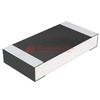 CRCW12061M54FKEA
Vishay Dale
RES SMD 1.54M OHM 1% 1/4W 1206
20000000
RC1206FR-071M54L
, and Bourns CR1206-FX-1544ELF. Understanding the specification alignment, thermal behavior differences, and qualification status of these alternatives enables informed substitution decisions in both new designs and existing production.
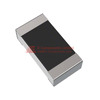 RC1206FR-071M54L
YAGEO
RES 1.54M OHM 1% 1/4W 1206
11004

RS73F2BTTD1544D (1)
Original Component Technical Foundation
The RS73F2BTTD1544D belongs to KOA Speer's RS73 series, designed specifically for automotive environments where temperature cycling, humidity exposure, and mechanical stress require validated reliability. The 1206 package size (3.20mm × 1.60mm × 0.70mm) provides sufficient power handling at 0.333W while maintaining compatibility with standard pick-and-place equipment. The thick film construction achieves ±0.5% initial tolerance with ±25ppm/°C temperature coefficient across the -55°C to 155°C operating range. AEC-Q200 qualification confirms the component has passed automotive-specific stress tests including temperature cycling, humidity resistance, and mechanical shock protocols. Moisture Sensitivity Level 1 rating eliminates baking requirements before reflow soldering. The 1.54 MΩ resistance value, while non-standard in E24 or E96 series, serves specialized applications such as high-impedance input stages, precision current sensing shunt networks, or RC timing circuits where the exact resistance determines critical timing parameters.
Vishay CRCW12061M54FKEA: Industrial-Grade Alternative with Established Reliability
Vishay's
CRCW1206
series provides a direct functional match with 1.54 MΩ resistance, ±1% tolerance, 0.25W power rating, and 1206 package dimensions. The thick film composition and ±100ppm/°C temperature coefficient represent slightly relaxed specifications compared to the KOA Speer part. This alternative suits applications where the tighter ±0.5% tolerance and ±25ppm/°C TC are not system-level requirements—for instance, pull-up or pull-down resistors in digital interfaces where absolute value matters less than ratio matching or general impedance setting.
 CRCW1206
VISHAY
CRCW1206 VISHAY SMD
40400
The CRCW series does not carry AEC-Q200 qualification, limiting its applicability in automotive Tier 1 production environments that mandate component-level qualification documentation. However, for industrial controls, medical equipment, or commercial electronics operating within the -55°C to 155°C range, this part delivers proven field reliability from Vishay's extensive manufacturing history. The lower power rating (0.25W versus 0.333W) requires derating analysis if the circuit approaches maximum dissipation limits. At 1.54 MΩ, power dissipation remains below 0.1W in most applications until voltage across the resistor exceeds 500V, making thermal performance acceptable for typical use cases.
Procurement advantages include Vishay's global distribution network and longer product lifecycles compared to specialized automotive-only series. Lead times typically remain shorter, and pricing structures benefit from higher production volumes across industrial markets. The MSL-1 rating matches the original component, maintaining identical moisture handling procedures.
Panasonic ERJ-8BQFR154V: Automotive-Qualified Option with Tighter Tolerance
The Panasonic ERJ-8BQF series targets automotive applications with AEC-Q200 Grade 1 qualification, supporting operation up to 150°C ambient temperature. The ERJ-8BQFR154V delivers 1.54 MΩ resistance with ±1% tolerance, 0.25W power rating, and ±100ppm/°C temperature coefficient in 1206 packaging. The automotive qualification makes this a suitable replacement for production environments requiring supplier quality documentation and long-term availability commitments typical of automotive component programs.
Compared to the RS73F2BTTD1544D, the Panasonic part trades tolerance and temperature coefficient performance for maintained automotive qualification status. The ±1% tolerance versus ±0.5% represents a 2× specification relaxation, which impacts precision applications such as instrumentation amplifier feedback networks or precision voltage references. In sensor signal conditioning circuits where the resistor forms part of a gain-setting network, the tolerance difference directly affects overall system accuracy. For a 10:1 voltage divider using 1.54 MΩ and 171 kΩ resistors, the ±1% tolerance contributes approximately 1% gain error, compared to 0.5% with the original component.
The ±100ppm/°C temperature coefficient produces an additional 0.75% resistance shift across a 75°C temperature swing (typical automotive underhood range from 25°C to 100°C), compared to 0.19% for the RS73 series. Applications sensitive to temperature-induced resistance changes—such as RC time constants in timing circuits or temperature compensation networks—require analysis of this 4× coefficient difference. The moisture resistance feature is not explicitly called out in the ERJ-8BQF datasheet, though AEC-Q200 qualification includes humidity testing. Panasonic's automotive product line maintains MSL-1 rating and RoHS compliance.
Yageo RC1206FR-071M54L: Cost-Effective Standard with Proven Manufacturing Base
Yageo's RC series represents a widely available thick film resistor family with 1.54 MΩ resistance, ±1% tolerance, 0.25W power rating, and ±100ppm/°C temperature coefficient in standard 1206 dimensions. This component lacks AEC-Q200 qualification but provides a cost-optimized solution for commercial and industrial applications where automotive-specific validation is not contractually required. The -55°C to 155°C operating range matches the original specification, supporting most non-automotive temperature profiles.
The tolerance and temperature coefficient specifications align with the Panasonic alternative, but without automotive qualification documentation. This positioning makes the RC series appropriate for prototyping, low-volume production, or commercial equipment where component cost drives selection decisions. Yageo's high-volume manufacturing capabilities ensure consistent availability and competitive pricing, particularly for larger order quantities. The MSL-1 rating and standard thick film construction maintain compatibility with existing assembly processes.
For engineering teams evaluating second-source options during component selection phases, the RC series serves as a baseline comparison point. The absence of automotive qualification reduces testing burden in non-automotive contexts, while the standard electrical specifications meet requirements for general-purpose high-impedance applications. Lead times typically remain short due to Yageo's extensive distribution partnerships and regional manufacturing facilities.
Bourns CR1206-FX-1544ELF: Automotive Resistance Network Alternative
Bourns positions the CR1206-FX series as an automotive-qualified thick film resistor line with AEC-Q200 compliance. The CR1206-FX-1544ELF provides 1.54 MΩ resistance (note the four-digit resistance code matching the original part number's 1544 designation), ±1% tolerance, 0.25W power rating, and ±100ppm/°C temperature coefficient in 1206 packaging. The automotive qualification and moisture resistance features align with KOA Speer's RS73 series positioning, making this alternative suitable for direct replacement in automotive production environments.
The specification trade-offs mirror the Panasonic option: maintained automotive qualification with relaxed tolerance and temperature coefficient. The four-digit resistance code (1544) in the Bourns part number directly reflects the 1.54 MΩ value, simplifying component database management and reducing ordering errors. Bourns' automotive component programs typically include long-term availability commitments and change notification processes required by automotive OEM supply agreements.
The -55°C to 155°C operating temperature range covers automotive requirements, and MSL-1 rating eliminates moisture-related handling concerns. The thick film construction and standard termination design maintain compatibility with lead-free reflow profiles. Bourns maintains regional sales support and technical resources for automotive customers, facilitating qualification activities and first-article inspections.
Comparative Analysis of Electrical and Mechanical Specifications
Direct comparison of the five resistor options reveals clear differentiation in tolerance, temperature coefficient, and qualification status. The original RS73F2BTTD1544D maintains the tightest tolerance at ±0.5% and lowest temperature coefficient at ±25ppm/°C, positioning it for precision applications. The four alternatives converge on ±1% tolerance and ±100ppm/°C temperature coefficient, with differentiation primarily in automotive qualification status and manufacturer-specific reliability data.
Power rating varies between 0.25W (Vishay, Panasonic, Yageo, Bourns) and 0.333W (KOA Speer). At 1.54 MΩ, the power dissipation equals V²/R, requiring approximately 700V across the resistor to reach 0.333W and 620V to reach 0.25W. Most applications operate well below these voltages, making the power rating difference functionally negligible except in high-voltage circuits such as photomultiplier tube biasing, ionization detection circuits, or high-voltage power supply feedback networks.
The ±25ppm/°C versus ±100ppm/°C temperature coefficient creates measurable performance differences in temperature-sensitive applications. For a circuit operating across a 100°C temperature range, the RS73 part exhibits 0.25% resistance change, while alternatives show 1% change. In precision analog designs—such as instrumentation amplifier gain-setting networks, precision current sources, or temperature-compensated voltage references—this 4× difference directly impacts output accuracy. Applications less sensitive to temperature drift, including digital pull-up/pull-down networks, general impedance matching, or non-critical timing circuits, accommodate the wider coefficient specification.
All options maintain 1206 (3216 metric) package dimensions with two-terminal construction, ensuring footprint compatibility. The maximum height varies by tenths of millimeters but remains within 0.70mm, compatible with standard board assembly clearances. MSL-1 rating across all parts eliminates moisture-related process variations. AEC-Q200 qualification status divides the options: KOA Speer, Panasonic, and Bourns carry automotive certification, while Vishay and Yageo serve commercial and industrial markets without automotive-specific validation.
Practical Validation Methods Using Panasonic ERJ-8BQFR154V
When substituting the Panasonic ERJ-8BQFR154V for the original RS73F2BTTD1544D in an existing design, verification focuses on tolerance-induced gain shifts, temperature coefficient effects, and power dissipation adequacy. For a voltage divider circuit using 1.54 MΩ and a 150 kΩ resistor to scale a 12V signal to 1.06V, the ±1% tolerance on the high-side resistor creates ±0.01V output uncertainty at room temperature, compared to ±0.005V with the original ±0.5% part. This difference matters when the downstream analog-to-digital converter has 12-bit resolution (2.9mV LSB at 12V full scale), as the tolerance-induced error approaches the ADC quantization step.
Temperature coefficient validation requires measuring resistance at temperature extremes matching the application environment. Using a temperature chamber, measure resistance at -40°C, +25°C, and +125°C (representative automotive range). The ±100ppm/°C specification permits 1.65% total resistance shift from -40°C to +125°C (165°C span × 100ppm/°C), compared to 0.41% for the original ±25ppm/°C part. For the voltage divider example, this translates to approximately 17mV output variation across temperature with the Panasonic part versus 4mV with the KOA Speer original. If system accuracy requirements allocate less than 17mV error budget to this resistor's temperature drift, the substitution fails validation.
Power dissipation verification calculates actual in-circuit stress versus the derated power rating. With 12V across the 1.54 MΩ resistor, dissipation equals 93μW—well below the 0.25W rating even with standard 50% derating for reliability. Thermal imaging during maximum operating temperature testing confirms junction temperature remains below the 155°C maximum specification. For automotive applications, verification includes AEC-Q200 stress test correlation: cross-reference Panasonic's qualification report to confirm humidity resistance testing (85°C/85%RH per JESD22-A101), temperature cycling (JESD22-A104), and mechanical shock (JESD22-B104) meet or exceed the original component's validated performance.
Functional testing includes measuring circuit-level parameters affected by the resistor: amplifier gain accuracy, timing period variation, or sensor output linearity. In a precision current-to-voltage converter where the 1.54 MΩ resistor sets transimpedance gain, measure small-signal gain across the operating temperature range and compare to theoretical predictions based on the ±1% tolerance and ±100ppm/°C coefficient. Deviations exceeding calculated error budgets indicate parasitic effects or thermal coupling requiring design modification.
Application-Specific Selection Guidelines
For automotive production requiring AEC-Q200 qualification documentation, the candidate list narrows to Panasonic ERJ-8BQFR154V and Bourns CR1206-FX-1544ELF. Both maintain automotive certification while accepting the tolerance and temperature coefficient trade-offs. Selection between these options considers manufacturer relationships, regional availability, and cost structures. Panasonic's broader automotive product portfolio may offer advantages for multi-component sourcing, while Bourns' resistance network background provides technical support for more complex configurations.
High-precision applications demanding ±0.5% tolerance and ±25ppm/°C temperature coefficient have no direct equivalent in the compared alternatives. These requirements mandate either accepting the KOA Speer RS73 series supply constraints or redesigning the circuit to accommodate wider tolerance and temperature coefficient. Design modifications might include external trimming provisions, temperature compensation networks, or recalibration procedures that relax the component-level specification while maintaining system-level accuracy.
Cost-sensitive commercial applications benefit from the Vishay
CRCW12061M54FKEA
or Yageo
CRCW12061M54FKEA
Vishay Dale
RES SMD 1.54M OHM 1% 1/4W 1206
20000000
RC1206FR-071M54L
options. The absence of automotive qualification reduces component cost by 30-50% compared to AEC-Q200 parts, acceptable when end-equipment qualification does not require component-level automotive certification. Industrial controls, test equipment, and commercial electronics operating within the specified temperature range utilize these alternatives while maintaining reliability through application-level validation testing.
RC1206FR-071M54L
YAGEO
RES 1.54M OHM 1% 1/4W 1206
11004
Prototyping and low-volume production favor readily available options with short lead times. The Vishay and Yageo parts typically stock in broader distribution channels with smaller minimum order quantities. This availability accelerates development cycles and reduces inventory carrying costs for products not yet in volume production. The standardized electrical specifications simplify second-source qualification when transitioning to production volumes that justify automotive-grade components.
Conclusion
Replacing the KOA Speer RS73F2BTTD1544D requires balancing tolerance precision, temperature coefficient, automotive qualification needs, and availability constraints. For automotive production maintaining AEC-Q200 requirements, the Panasonic ERJ-8BQFR154V or Bourns CR1206-FX-1544ELF provide qualified alternatives with ±1% tolerance and ±100ppm/°C temperature coefficient—acceptable when system-level error budgets accommodate the relaxed specifications. Applications demanding the original ±0.5% tolerance and ±25ppm/°C coefficient find no direct equivalent among standard catalog parts, requiring either supply chain adaptation to the KOA Speer part or circuit redesign. Commercial and industrial applications outside automotive qualification requirements benefit from the Vishay
CRCW12061M54FKEA
or Yageo
CRCW12061M54FKEA
Vishay Dale
RES SMD 1.54M OHM 1% 1/4W 1206
20000000
RC1206FR-071M54L
, offering cost advantages and broad availability. Validation of any substitute must include tolerance-induced error analysis, temperature coefficient verification across the operating range, and power dissipation confirmation under maximum stress conditions. The decision path begins with identifying whether automotive qualification is mandatory, then evaluating if the 2× tolerance and 4× temperature coefficient relaxation fits within system error budgets, and finally selecting based on availability and total cost of ownership.
RC1206FR-071M54L
YAGEO
RES 1.54M OHM 1% 1/4W 1206
11004


