


The RN73R2BTTD6982D10 from KOA Speer Electronics is a precision thin film chip resistor engineered for automotive and high-reliability applications where tight tolerance and thermal stability are required. This 1206 surface mount resistor delivers 69.8 kOhms resistance with ±0.5% tolerance, combining accuracy with robust construction suitable for harsh operating environments.
Built on thin film technology, this component achieves a low temperature coefficient of ±10ppm/°C, ensuring minimal resistance drift across temperature variations from -55°C to 155°C. The quarter-watt power rating (0.25W) provides adequate dissipation capacity for signal conditioning, voltage division, and bias network applications commonly found in automotive control modules, sensor interfaces, and precision measurement circuits.
KOA Speer designed the RN73R series with AEC-Q200 qualification, meeting automotive-grade reliability standards for stress testing, thermal cycling, and moisture resistance. The moisture resistant construction supports operation in humid conditions without degradation, while the 1206 footprint (3.20mm x 1.60mm) offers a practical balance between board space efficiency and power handling. The maximum seated height of 0.70mm accommodates compact PCB assemblies where vertical clearance is constrained.
This resistor maintains ROHS3 compliance and carries Moisture Sensitivity Level 1 classification, eliminating floor life concerns during assembly and simplifying storage requirements. The two-termination design provides standard reflow soldering compatibility with automated pick-and-place equipment. Tape and reel packaging supports high-volume manufacturing processes.
For applications demanding precision resistance values in automotive electronics—such as CAN bus termination, current sensing paths, or analog signal processing—the RN73R2BTTD6982D10 delivers the combination of accuracy, temperature stability, and environmental resilience needed for long-term field operation. The thin film construction provides superior noise performance compared to thick film alternatives in low-level signal applications where parasitic effects must be minimized.

RN73R2BTTD6982D10 (1)
Introduction
When sourcing precision resistors for automotive-grade applications, finding direct equivalents or suitable alternatives to the RN73R2BTTD6982D10 from KOA Speer Electronics becomes necessary during component obsolescence reviews, supply chain constraints, or multi-vendor qualification processes. This 69.8 kOhm thin film resistor, designed to meet AEC-Q200 automotive standards with ±0.5% tolerance and moisture resistance, serves in circuits where long-term stability and environmental durability are non-negotiable. Engineers working on motor control interfaces, sensor signal conditioning paths, or precision voltage dividers in automotive ECUs often require functionally interchangeable parts that maintain tight tolerance specifications across temperature extremes while meeting the same qualification standards.
The alternative part numbers discussed in this article include
RN732BTTD6982D10
from the same manufacturer,
 RN732BTTD6982D10
KOA Speer Electronics, Inc.
RES 69.8K OHM 0.5% 1/8W 1206
1856723
ERA-8AEB6982V
from Panasonic,
 ERA-8AEB6982V
Panasonic Electronic Components
RES SMD 69.8K OHM 0.1% 1/4W 1206
5576
CRCW12066K98FKEA
from Vishay Dale,
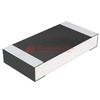 CRCW12066K98FKEA
Vishay Dale
RES SMD 6.98K OHM 1% 1/4W 1206
9829
RT1206BRD076K98L
from Yageo, and ERJ-8BQFR068V from Panasonic. Each alternative will be evaluated based on electrical equivalence, qualification level, thermal performance characteristics, and manufacturing process differences to establish selection boundaries for specific design contexts.
 RT1206BRD076K98L
YAGEO
RES SMD 6.98K OHM 0.1% 1/4W 1206
2000000
Understanding the Original Component: RN73R2BTTD6982D10
The RN73R2BTTD6982D10 belongs to KOA Speer's RN73R series, a thin film resistor line engineered for automotive environments where moisture ingress and thermal cycling represent primary failure mechanisms. The 1206 package format provides a balance between power dissipation capability (0.25W) and board space efficiency, while the ±10ppm/°C temperature coefficient ensures resistance drift remains within 0.1% across the full -55°C to 155°C operating range—a specification that directly impacts analog circuit accuracy in underhood installations.
Thin film construction, as opposed to thick film alternatives, achieves tighter initial tolerance and lower noise characteristics through a subtractive manufacturing process where a uniform resistive layer is laser-trimmed to final value. This process inherently produces lower current noise and better high-frequency performance, making thin film resistors the standard choice for precision measurement circuits, high-resolution ADC reference networks, and low-distortion signal paths. The moisture resistance feature addresses a common failure mode in automotive connectors and sensor housings where condensation or fluid intrusion can degrade thick film resistors through electrolytic migration.
AEC-Q200 qualification includes stress test protocols beyond commercial-grade components: 1000-hour high-temperature storage life testing at 155°C, thermal shock cycling between temperature extremes, moisture resistance testing under biased conditions, and mechanical shock/vibration profiles that simulate 15 years of road exposure. Parts qualified to this standard have demonstrated predictable failure rates in automotive duty cycles, which becomes the baseline requirement when evaluating alternatives.
Direct Manufacturer Alternative: RN732BTTD6982D10
The
RN732BTTD6982D10
represents KOA Speer's parallel product line within the same resistance value and package size. The primary distinction lies in the series designation—RN732 versus RN73R—where the former omits certain extended qualification parameters present in the RN73R family. Both series maintain the same 69.8 kOhm ±0.5% tolerance, 1206 footprint, and thin film construction, but the RN732 series may have different moisture resistance test durations or slightly relaxed temperature coefficient groupings depending on manufacturing lot qualifications.
RN732BTTD6982D10
KOA Speer Electronics, Inc.
RES 69.8K OHM 0.5% 1/8W 1206
1856723
From a procurement perspective,
RN732BTTD6982D10
shares the same base production line and trimming equipment, resulting in nearly identical electrical characteristics during initial parametric testing. The resistance element composition and termination plating remain consistent, ensuring soldering profiles and long-term contact resistance behavior match the original part. However, AEC-Q200 qualification documentation should be verified at the batch level, as some RN732 production runs may be designated for industrial rather than automotive use, affecting warranty terms and failure rate guarantees in safety-critical systems.
RN732BTTD6982D10
KOA Speer Electronics, Inc.
RES 69.8K OHM 0.5% 1/8W 1206
1856723
This alternative proves most suitable when the original RN73R part faces allocation constraints but the application resides in a controlled environment where full automotive qualification provides margin beyond actual stress conditions—examples include cabin electronics with active thermal management or secondary control modules operating within narrower temperature bands than the -55°C to 155°C specification allows. Design validation would focus on confirming that batch-specific qualification reports demonstrate equivalent stress test performance, particularly moisture resistance under bias and temperature cycling endurance.
Cross-Manufacturer Option: ERA-8AEB6982V from Panasonic
The
ERA-8AEB6982V
transitions to Panasonic's thin film resistor family while maintaining the 69.8 kOhm resistance value and 1206 package footprint. This series employs Panasonic's proprietary thin film deposition process, which typically yields temperature coefficients in the ±25ppm/°C range for standard grades, representing a wider drift window compared to the ±10ppm/°C specification of the RN73R2BTTD6982D10. In circuits where the resistor contributes to gain-setting networks or voltage dividers, this increased temperature coefficient translates to approximately 0.25% additional error across the full operating range—acceptable in many feedback loops but potentially problematic in precision measurement applications where 12-bit or higher ADC resolution depends on reference stability.
ERA-8AEB6982V
Panasonic Electronic Components
RES SMD 69.8K OHM 0.1% 1/4W 1206
5576
Power dissipation ratings remain consistent at 0.25W in 1206 format, governed by the same thermal resistance from junction to ambient through the PCB pad interface. However, Panasonic's ERA series may specify power derating curves that begin at different ambient temperatures, typically 70°C versus 125°C for automotive-qualified parts. This derating characteristic becomes relevant in designs where resistors mount near heat-generating components such as MOSFETs or power inductors, requiring thermal simulation to verify that actual power dissipation remains below derated limits.
The
ERA-8AEB6982V
lacks explicit AEC-Q200 qualification in standard catalog listings, positioning it as an industrial-grade alternative suitable for cost-sensitive applications or non-safety-critical automotive functions where component failure does not propagate to loss of vehicle control or occupant protection. Designers adopting this alternative in automotive contexts would need to implement additional qualification testing at the system level, including extended temperature cycling and moisture resistance validation, to establish reliability metrics equivalent to AEC-Q200-qualified parts.
ERA-8AEB6982V
Panasonic Electronic Components
RES SMD 69.8K OHM 0.1% 1/4W 1206
5576
Alternative with Thick Film Construction: CRCW12066K98FKEA from Vishay Dale
Vishay Dale's
CRCW12066K98FKEA
represents a fundamental construction shift from thin film to thick film resistor technology. While maintaining the 69.8 kOhm resistance value and 1206 package size, thick film resistors utilize a screen-printed resistive paste that is fired at high temperature to form the resistive element. This manufacturing process achieves lower unit costs but inherently produces wider tolerance distributions and higher temperature coefficients, typically ±100ppm/°C for standard grades—ten times the drift of the original thin film part.
CRCW12066K98FKEA
Vishay Dale
RES SMD 6.98K OHM 1% 1/4W 1206
9829
The tolerance specification of ±1% for
CRCW12066K98FKEA
versus ±0.5% for RN73R2BTTD6982D10 directly impacts initial accuracy in precision circuits. In a voltage divider configuration where two resistors establish a reference voltage, the combined tolerance error increases according to root-sum-square calculations, potentially doubling the output voltage uncertainty compared to thin film implementations. Applications sensitive to initial accuracy—such as battery management system voltage monitoring or sensor calibration circuits—would require circuit redesign to incorporate software calibration routines or trimming procedures if substituting thick film parts.
CRCW12066K98FKEA
Vishay Dale
RES SMD 6.98K OHM 1% 1/4W 1206
9829
Thick film resistors also exhibit higher current noise levels due to the granular structure of the resistive paste, where microscopic conductive particles create random resistance fluctuations under current flow. This noise characteristic degrades signal-to-noise ratio in low-level signal amplification stages, making
CRCW12066K98FKEA
unsuitable for microphone preamplifiers, strain gauge conditioning, or other sub-millivolt signal paths where resistor noise contributes meaningfully to the overall noise floor.
CRCW12066K98FKEA
Vishay Dale
RES SMD 6.98K OHM 1% 1/4W 1206
9829
However, thick film construction offers advantages in surge current handling and mechanical robustness. The fired paste structure withstands higher transient overload currents without catastrophic failure, providing graceful degradation characteristics in circuits exposed to inductive kickback or electrostatic discharge events. For applications such as LED current limiting, power supply feedback networks, or protection circuits where transient immunity outweighs precision requirements,
CRCW12066K98FKEA
presents a viable cost-reduced alternative with appropriate circuit margin adjustments.
CRCW12066K98FKEA
Vishay Dale
RES SMD 6.98K OHM 1% 1/4W 1206
9829
Cost-Optimized Selection: RT1206BRD076K98L from Yageo
Yageo's
RT1206BRD076K98L
belongs to the RT series, a high-volume thin film resistor line targeting consumer electronics and industrial applications. The part maintains 69.8 kOhm resistance with ±0.1% tolerance—tighter than the original ±0.5% specification—and a ±25ppm/°C temperature coefficient, positioning it between the KOA Speer automotive-grade part and industrial alternatives in terms of temperature stability.
RT1206BRD076K98L
YAGEO
RES SMD 6.98K OHM 0.1% 1/4W 1206
2000000
The tighter initial tolerance of ±0.1% reduces resistor sorting requirements in precision applications and can eliminate factory calibration steps in voltage reference circuits or precision attenuators. However, this tolerance advantage diminishes over the product lifetime in harsh environments where moisture ingress, thermal cycling, or mechanical stress causes resistance drift beyond initial specifications. Without AEC-Q200 qualification, the
RT1206BRD076K98L
lacks validated data on long-term drift characteristics under automotive stress conditions, creating uncertainty in applications where 10-year reliability predictions drive component selection.
RT1206BRD076K98L
YAGEO
RES SMD 6.98K OHM 0.1% 1/4W 1206
2000000
The RT series typically qualifies to commercial temperature ranges (-55°C to 125°C) rather than the extended 155°C upper limit of automotive parts. This 30°C reduction in maximum operating temperature restricts placement options on densely populated boards where local ambient temperatures exceed 100°C during peak operating conditions. Thermal imaging during design validation becomes necessary to map actual component temperatures and verify that derating margins remain adequate throughout the operating envelope.
From a supply chain perspective, Yageo's high-volume production provides consistent availability and competitive pricing, making
RT1206BRD076K98L
attractive for applications where automotive qualification represents over-specification relative to actual environmental exposure. Examples include charging infrastructure electronics, off-road equipment with active cooling, or marine applications where environmental testing follows different standards but stress levels remain comparable to automotive use cases.
RT1206BRD076K98L
YAGEO
RES SMD 6.98K OHM 0.1% 1/4W 1206
2000000
Alternative Manufacturer Option: ERJ-8BQFR068V from Panasonic
The ERJ-8BQFR068V from Panasonic's ERJ series presents another thick film alternative, similar in construction philosophy to the Vishay CRCW series but with Panasonic's specific paste formulations and termination metallurgy. The part specifies 68 kOhm resistance rather than the exact 69.8 kOhm value, representing a 2.5% nominal difference that requires circuit analysis to determine functional impact.
In voltage divider applications, this 2.5% resistance shift directly translates to output voltage error, which may accumulate with other component tolerances to exceed acceptable limits. For a divider establishing a 2.5V reference from a 5V supply, substituting 68 kOhm for 69.8 kOhm in the upper leg would shift the output by approximately 40mV—significant in ADC reference circuits but potentially negligible in threshold detection or comparator applications with wide hysteresis bands.
The ERJ-8BQFR068V specifies ±1% tolerance and ±200ppm/°C temperature coefficient, representing the widest parameter spreads among the alternatives discussed. This combination suits low-frequency filtering applications, pull-up/pull-down resistor networks, or current-limiting functions where the resistor serves a protective role rather than establishing critical analog parameters. Designers would need to perform worst-case analysis across component tolerances and temperature extremes to verify that circuit performance margins accommodate the wider parameter distributions.
Panasonic's termination finish on the ERJ series typically uses a tin-plated outer layer over nickel barrier, optimized for lead-free soldering processes with
SAC305
or similar alloys. This termination structure provides good solderability but may exhibit different aging characteristics compared to the gold or palladium-silver terminations common in precision thin film resistors, where long-term contact resistance stability drives terminal metallurgy choices. Applications involving numerous thermal cycles or harsh chemical exposure would benefit from accelerated aging tests comparing terminal resistance of ERJ versus RN73R alternatives under representative stress conditions.
 SAC305
ALPHA
SAC305 AIPHA SMD
200000
Comparison Summary: Key Parameter Differences
Evaluating the five alternatives against the original RN73R2BTTD6982D10 reveals distinct tradeoffs across critical performance dimensions:
-
RN732BTTD6982D10matches the original part in construction technology, tolerance, and temperature coefficient, differing primarily in qualification documentation scope. This alternative serves as a near-drop-in replacement when full automotive qualification documentation may be relaxed for specific applications or when manufacturing batch qualifications demonstrate equivalent performance through supplementary testing.
RN732BTTD6982D10
KOA Speer Electronics, Inc.
RES 69.8K OHM 0.5% 1/8W 1206
1856723
-
ERA-8AEB6982Vfrom Panasonic maintains thin film construction and tight tolerance but accepts a wider ±25ppm/°C temperature coefficient and lacks AEC-Q200 qualification. The temperature coefficient difference introduces 0.25% additional error across operating range extremes, positioning this alternative for industrial applications or non-safety-critical automotive functions where cost reduction justifies modest accuracy degradation.
ERA-8AEB6982V
Panasonic Electronic Components
RES SMD 69.8K OHM 0.1% 1/4W 1206
5576
-
CRCW12066K98FKEAshifts to thick film construction with ±1% tolerance and ±100ppm/°C temperature coefficient. The tenfold increase in temperature coefficient and wider initial tolerance restrict use to circuits with substantial accuracy margins, but the thick film structure provides superior transient current handling and mechanical robustness for protection circuit applications.
CRCW12066K98FKEA
Vishay Dale
RES SMD 6.98K OHM 1% 1/4W 1206
9829
-
RT1206BRD076K98Loffers superior ±0.1% initial tolerance but accepts ±25ppm/°C temperature coefficient and a reduced 125°C maximum operating temperature. This alternative optimizes initial accuracy at the expense of high-temperature capability, suiting precision applications in thermally controlled environments where 155°C operation represents unnecessary margin.
RT1206BRD076K98L
YAGEO
RES SMD 6.98K OHM 0.1% 1/4W 1206
2000000
- ERJ-8BQFR068V introduces a 2.5% nominal resistance shift along with thick film construction limitations, positioning it as the least-direct substitute. This part finds application when circuit redesign can accommodate the resistance change or when the function tolerates wide parameter variations without performance impact.
Practical Validation Methods
Verifying functional equivalence between the original RN73R2BTTD6982D10 and selected alternatives requires structured testing that simulates actual operating conditions rather than relying solely on datasheet parameter comparison. Using
RT1206BRD076K98L
as the validation example—chosen for its superior initial tolerance but reduced temperature rating—demonstrates the critical validation steps.
RT1206BRD076K98L
YAGEO
RES SMD 6.98K OHM 0.1% 1/4W 1206
2000000
Thermal characterization begins with infrared thermal imaging of the populated board during maximum power dissipation conditions. The original thin film resistor dissipating 0.25W generates approximately 70°C temperature rise above ambient when mounted on standard FR-4 with 1-ounce copper pads. The
RT1206BRD076K98L
should demonstrate similar thermal resistance, but differences in substrate attachment or internal construction may alter heat transfer efficiency. Measuring actual component temperature under load verifies that the reduced 125°C maximum rating maintains adequate derating margin; if measured component temperature exceeds 100°C, either board thermal design requires improvement through enlarged copper pads or forced airflow, or an alternative with 155°C rating proves necessary.
RT1206BRD076K98L
YAGEO
RES SMD 6.98K OHM 0.1% 1/4W 1206
2000000
Resistance drift testing across temperature involves measurement at -40°C, 25°C, 85°C, and 125°C using a four-wire resistance measurement setup to eliminate lead resistance errors. Plotting resistance versus temperature reveals the actual temperature coefficient, which should align with the ±25ppm/°C specification. For a 69.8 kOhm resistor, each 10ppm/°C contributes approximately 7 ohms per degree Celsius drift; the 100°C span from room temperature to 125°C would produce a maximum 174 ohm change, or 0.25% of nominal value. Circuit analysis determines whether this drift falls within acceptable bounds for the specific application—ADC reference circuits may require software compensation while comparator threshold networks likely tolerate this variation without adjustment.
Long-term stability assessment requires accelerated life testing that compresses expected operating lifetime into practical test durations. A standard approach involves temperature cycling between -40°C and 125°C with 15-minute dwells and resistance measurements every 100 cycles. After 500 thermal cycles—representing approximately 5 years of automotive duty in many applications—resistance drift should remain below 0.5% to demonstrate reliability equivalent to AEC-Q200-qualified parts. Any drift exceeding this threshold indicates accelerated aging mechanisms such as moisture ingress affecting the resistive element or solder joint degradation, requiring either design modification or alternative part selection.
Moisture resistance verification follows IEC 60068-2-78 or similar standards, where parts undergo 85°C/85% relative humidity exposure for 1000 hours under 1.5x rated voltage bias. Resistance measurement before and after exposure quantifies moisture-induced drift, which should remain below 1% for thin film resistors. Excessive drift indicates inadequate moisture barrier protection, common in industrial-grade parts lacking conformal coating or hermetic sealing features standard in automotive-qualified components.
Soldering process compatibility testing addresses potential differences in termination metallurgy between alternatives. Reflowing the
RT1206BRD076K98L
through three successive lead-free solder profiles at maximum recommended peak temperature (260°C) verifies that termination integrity and resistance value remain stable. Post-reflow resistance measurements should show less than 0.1% change from initial value, and visual inspection under magnification should reveal uniform solder fillet formation without termination lifting or solder wicking issues. Any degradation during multiple reflows suggests termination design differences requiring either process adjustment or reconsideration of the alternative part selection.
RT1206BRD076K98L
YAGEO
RES SMD 6.98K OHM 0.1% 1/4W 1206
2000000
Conclusion: Decision Path for Replacement Selection
Selecting an appropriate alternative to RN73R2BTTD6982D10 follows a systematic evaluation sequence beginning with application requirements analysis and progressing through parameter matching and qualification verification.
When AEC-Q200 qualification remains mandatory and maximum operating temperature reaches 155°C, the
RN732BTTD6982D10
provides the closest match, requiring only verification that batch-specific qualification reports demonstrate equivalent stress test performance to the original RN73R series. This alternative minimizes validation effort while maintaining full automotive qualification compliance.
RN732BTTD6982D10
KOA Speer Electronics, Inc.
RES 69.8K OHM 0.5% 1/8W 1206
1856723
For precision applications prioritizing initial accuracy over extended temperature operation, the
RT1206BRD076K98L
from Yageo offers superior ±0.1% tolerance with acceptable ±25ppm/°C temperature coefficient, provided that maximum component temperature remains below 110°C after derating considerations and that industrial-grade qualification meets system reliability requirements.
RT1206BRD076K98L
YAGEO
RES SMD 6.98K OHM 0.1% 1/4W 1206
2000000
Applications tolerating wider parameter variations to reduce component cost should evaluate the
ERA-8AEB6982V
from Panasonic when thin film construction benefits—low noise and good high-frequency characteristics—justify the ±25ppm/°C temperature coefficient tradeoff. This selection requires additional system-level qualification testing to establish reliability metrics absent from standard industrial-grade documentation.
ERA-8AEB6982V
Panasonic Electronic Components
RES SMD 69.8K OHM 0.1% 1/4W 1206
5576
The thick film alternatives
CRCW12066K98FKEA
and ERJ-8BQFR068V serve specialized applications where surge current handling, mechanical robustness, or extreme cost pressure outweigh precision requirements. Circuit redesign to accommodate wider tolerances and temperature coefficients becomes necessary, along with noise analysis in sensitive signal paths. The ERJ-8BQFR068V specifically requires circuit modification to address the 2.5% resistance shift, limiting its applicability to functions where nominal value adjustment causes no performance degradation.
CRCW12066K98FKEA
Vishay Dale
RES SMD 6.98K OHM 1% 1/4W 1206
9829
Regardless of selected alternative, practical validation through thermal characterization, temperature coefficient verification, accelerated aging, and moisture resistance testing establishes functional equivalence under actual operating conditions rather than relying on datasheet parameter comparison alone.

