


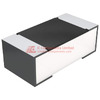
The RN73H1ETTP3000D10 from KOA Speer Electronics delivers precision resistance in a compact 0402 footprint designed for automotive and high-reliability applications. This 300 ohm chip resistor combines tight tolerance control, thermal stability, and environmental resilience in a space-constrained package suitable for dense PCB layouts and mission-critical circuits.
Built on metal film technology, the component achieves ±0.5% tolerance across its resistance value, providing measurement accuracy and circuit stability where analog signal conditioning, voltage dividers, and precision feedback networks require minimal deviation. The 1/16W power rating (0.063W) accommodates typical signal-level currents while maintaining thermal performance within the 0402 form factor. At 1.00mm × 0.50mm × 0.40mm, the physical dimensions support high-density mounting strategies common in modern automotive modules, portable instrumentation, and wearable electronics.
The RN73H series incorporates AEC-Q200 qualification, addressing the mechanical stress, thermal cycling, and long-term reliability requirements of automotive-grade components. Combined with moisture-resistant construction, the resistor maintains stable electrical characteristics across humidity exposure and temperature extremes from -55°C to 155°C. The ±10ppm/°C temperature coefficient limits resistance drift over operating temperature ranges, supporting precision analog circuits, sensor interfaces, and reference voltage networks where temperature-induced error must remain predictable.
With an MSL 1 rating, the component requires no special moisture handling or bake-out procedures prior to reflow soldering, streamlining production processes and reducing line downtime. The 0402 package uses standard two-terminal construction compatible with automated pick-and-place equipment and lead-free solder profiles. RoHS3 compliance and REACH unaffected status address regulatory requirements for global supply chains and end-product certifications.
Applications span automotive body control modules, ADAS sensor interfaces, battery management systems, and infotainment electronics where space constraints intersect with environmental exposure and long service life requirements. The resistor also fits medical device circuitry, industrial sensor networks, and aerospace telemetry systems that demand traceable quality standards and sustained performance under mechanical vibration and thermal stress. Whether used in precision current sensing paths, analog filter stages, or impedance matching networks, the RN73H1ETTP3000D10 balances dimensional economy with functional reliability across temperature, humidity, and operational lifetime.
When a specific precision resistor becomes unavailable due to supply chain constraints, allocation status, or component obsolescence management, identifying functionally equivalent alternatives becomes necessary for maintaining production continuity. The RN73H1ETTP3000D10 from KOA Speer Electronics represents a high-precision 300-ohm thin film resistor in 0402 package with AEC-Q200 automotive qualification and tight ±0.5% tolerance—a specification set that requires careful matching when sourcing replacements.
Alternative part numbers that meet or exceed the core electrical and mechanical specifications of RN73H1ETTP3000D10 include Panasonic
ERJ-2GEJ301X
, Vishay
 ERJ-2GEJ301X
Panasonic Electronic Components
RES SMD 300 OHM 5% 1/10W 0402
20000000
CRCW0402300RFKED
, Yageo
 CRCW0402300RFKED
Vishay Dale
RES SMD 300 OHM 1% 1/16W 0402
20000000
RC0402FR-07300RL
, Susumu
 RC0402FR-07300RL
Yageo
RES SMD 300 OHM 1% 1/16W 0402
20000000
RG1005P-301-B-T5
, and Bourns CR0402-FX-3000ELF. Each candidate offers 300-ohm resistance in 0402 footprint but differs in tolerance, temperature coefficient, power rating, and qualification status.
 RG1005P-301-B-T5
Susumu
RES SMD 300 OHM 0.1% 1/16W 0402
76926

RN73H1ETTP3000D10 (1)
Understanding the Original Component Characteristics
The RN73H1ETTP3000D10 belongs to KOA Speer's RN73H automotive-grade thin film resistor series. Its metal film composition delivers ±10ppm/°C temperature coefficient stability across -55°C to 155°C operating range. The 0.5% tolerance specification positions this component for precision signal conditioning, voltage reference dividers, and current sensing applications where resistance drift directly impacts measurement accuracy.
AEC-Q200 qualification indicates completion of automotive reliability stress testing including high temperature operating life, temperature cycling, and moisture resistance evaluation. The moisture sensitivity level 1 rating allows unlimited floor life exposure before reflow soldering. Physical dimensions of 1.00mm × 0.50mm with maximum 0.40mm height define the mechanical envelope.
Power dissipation of 0.063W at 70°C represents the thermal design point. At this power level in typical forced-air cooling environments, self-heating contributes approximately 5-8°C temperature rise, which translates to 50-80ppm additional resistance shift beyond ambient temperature coefficient effects.
Panasonic ERJ-2GEJ301X as Direct Functional Equivalent
The Panasonic
ERJ-2GEJ301X
provides 300 ohms in 0402 package with identical ±0.5% tolerance and shares automotive qualification under AEC-Q200. This thick film ruthenium-based resistor achieves ±100ppm/°C temperature coefficient—ten times the drift rate of the original metal film design.
ERJ-2GEJ301X
Panasonic Electronic Components
RES SMD 300 OHM 5% 1/10W 0402
20000000
This temperature coefficient difference becomes significant in applications experiencing wide thermal excursions. For a voltage divider network establishing a 2.5V reference from a 5V supply in automotive environment cycling between -40°C and 125°C, the 165°C swing produces 1650ppm (0.165%) additional error with
ERJ-2GEJ301X
compared to 165ppm (0.0165%) with RN73H1ETTP3000D10. When combined with initial tolerance, total error budget increases from approximately ±0.52% to ±0.67%.
ERJ-2GEJ301X
Panasonic Electronic Components
RES SMD 300 OHM 5% 1/10W 0402
20000000
Power rating of 0.1W at 70°C provides 58% additional thermal margin compared to the original specification. Operating temperature range extends to -55°C ~ 155°C matching the KOA Speer part. The thick film construction offers inherently lower voltage coefficient of resistance, typically below 0.1ppm/V compared to 5-10ppm/V for thin films at equivalent resistance values.
Cost structure typically runs 15-25% below equivalent thin film components due to simpler manufacturing process. For high-volume applications where the temperature coefficient degradation remains within acceptable system error budget,
ERJ-2GEJ301X
represents a practical cost-optimized alternative.
ERJ-2GEJ301X
Panasonic Electronic Components
RES SMD 300 OHM 5% 1/10W 0402
20000000
Vishay CRCW0402300RFKED for Enhanced Precision Requirements
The Vishay
CRCW0402300RFKED
thin film resistor maintains ±1% tolerance while achieving ±25ppm/°C temperature stability—intermediate between the original specification and thick film alternatives. This CRCW series component includes AEC-Q200 qualification and extends power handling to 0.063W, matching the RN73H1ETTP3000D10 thermal capability.
CRCW0402300RFKED
Vishay Dale
RES SMD 300 OHM 1% 1/16W 0402
20000000
The 1% tolerance specification represents a controlled relaxation from 0.5% that may prove acceptable in applications where initial accuracy matters less than temperature stability. For instance, in RC timing networks where absolute frequency accuracy depends on both R and C component tolerances, the resistor tolerance contribution often remains secondary to capacitor stability effects.
Temperature coefficient performance at ±25ppm/°C delivers 2.5× improved stability compared to thick film options while remaining 2.5× less stable than the original metal film design. This positions
CRCW0402300RFKED
appropriately for applications requiring better than thick film stability without demanding full thin film performance.
CRCW0402300RFKED
Vishay Dale
RES SMD 300 OHM 1% 1/16W 0402
20000000
Physical dimensions conform to standard 0402 envelope. Operating temperature range of -55°C to 155°C maintains compatibility with automotive thermal requirements. The thin film construction provides low current noise characteristics suitable for high-impedance measurement circuits and precision amplifier feedback networks.
Yageo RC0402FR-07300RL for General Purpose Applications
Yageo's
RC0402FR-07300RL
offers 300 ohms at ±1% tolerance with ±100ppm/°C temperature coefficient in standard 0402 package. This thick film resistor lacks automotive qualification, positioning it for industrial and commercial applications rather than automotive deployment.
RC0402FR-07300RL
Yageo
RES SMD 300 OHM 1% 1/16W 0402
20000000
Power dissipation rating of 0.063W matches the original specification. Operating temperature range of -55°C to 155°C provides adequate environmental capability for many non-automotive applications. The absence of AEC-Q200 testing means reliability data under automotive-specific stress conditions remains unvalidated.
Manufacturing volume and broad distribution make
RC0402FR-07300RL
readily available with competitive pricing. For applications in consumer electronics, industrial controls, or telecommunications equipment where automotive qualification requirements do not apply, this component serves as a cost-effective functional replacement.
RC0402FR-07300RL
Yageo
RES SMD 300 OHM 1% 1/16W 0402
20000000
Moisture sensitivity level 1 maintains compatibility with standard PCB assembly processes. The thick film ruthenium composition delivers stable performance under normal operating conditions but exhibits greater sensitivity to overload stress and ESD events compared to thin film alternatives.
Susumu RG1005P-301-B-T5 for Ultra-Precision Performance
The Susumu
RG1005P-301-B-T5
represents a premium thin film alternative delivering ±0.1% tolerance with ±5ppm/°C temperature coefficient. This specification exceeds the original RN73H1ETTP3000D10 by factors of 5× and 2× respectively in both parameters.
RG1005P-301-B-T5
Susumu
RES SMD 300 OHM 0.1% 1/16W 0402
76926
Power rating of 0.05W indicates slightly reduced thermal capability, requiring attention in applications approaching the 0.063W dissipation level of the original design. The tighter specifications come through optimized thin film deposition and laser trimming processes that also constrain maximum power handling.
Operating temperature range of -55°C to 155°C maintains environmental compatibility. While not explicitly AEC-Q200 qualified, Susumu's RG1005P series undergoes equivalent reliability testing suitable for high-reliability industrial applications. The ultra-low temperature coefficient makes this component appropriate for precision measurement equipment, metrology standards, and high-accuracy data conversion circuits.
Cost premium typically runs 3-5× above standard thin film components, limiting economic viability to applications where the enhanced performance specifications directly enable system functionality or reduce calibration requirements.
Bourns CR0402-FX-3000ELF as Industrial Alternative
Bourns CR0402-FX-3000ELF provides 300 ohms at ±1% tolerance with ±100ppm/°C temperature coefficient in thick film construction. Power rating extends to 0.1W at 70°C, offering increased thermal margin. Operating temperature range of -55°C to 155°C covers industrial requirements.
This component lacks automotive qualification but includes industrial-grade reliability testing. For applications in power supplies, motor drives, or process control equipment operating in controlled environments, the CR0402-FX-3000ELF delivers adequate performance without automotive qualification overhead.
The thick film composition exhibits typical pulse handling characteristics suitable for most filtering and signal conditioning applications. Voltage coefficient remains below 0.1ppm/V at 300-ohm resistance level. Moisture sensitivity level 1 simplifies handling and storage requirements.
Pricing structure aligns with other industrial-grade thick film resistors, providing cost advantage over automotive-qualified alternatives when AEC-Q200 certification proves unnecessary for the target application.
Comparative Analysis of Alternative Solutions
Examining tolerance specifications, the range spans from ±0.1% (Susumu
RG1005P-301-B-T5
) through ±0.5% (Panasonic
RG1005P-301-B-T5
Susumu
RES SMD 300 OHM 0.1% 1/16W 0402
76926
ERJ-2GEJ301X
) to ±1% (Vishay
ERJ-2GEJ301X
Panasonic Electronic Components
RES SMD 300 OHM 5% 1/10W 0402
20000000
CRCW0402300RFKED
, Yageo
CRCW0402300RFKED
Vishay Dale
RES SMD 300 OHM 1% 1/16W 0402
20000000
RC0402FR-07300RL
, Bourns CR0402-FX-3000ELF). Applications requiring initial accuracy better than 0.5% limit selection to Susumu or require component screening of 1% tolerance parts.
RC0402FR-07300RL
Yageo
RES SMD 300 OHM 1% 1/16W 0402
20000000
Temperature coefficient performance separates into three tiers: ±5-10ppm/°C for premium thin films (Susumu at ±5ppm/°C, original KOA Speer at ±10ppm/°C), ±25ppm/°C for standard thin films (Vishay
CRCW0402300RFKED
), and ±100ppm/°C for thick film alternatives (Panasonic
CRCW0402300RFKED
Vishay Dale
RES SMD 300 OHM 1% 1/16W 0402
20000000
ERJ-2GEJ301X
, Yageo
ERJ-2GEJ301X
Panasonic Electronic Components
RES SMD 300 OHM 5% 1/10W 0402
20000000
RC0402FR-07300RL
, Bourns CR0402-FX-3000ELF). Temperature stability requirements directly determine the appropriate tier.
RC0402FR-07300RL
Yageo
RES SMD 300 OHM 1% 1/16W 0402
20000000
Power handling divides between 0.05W (Susumu
RG1005P-301-B-T5
), 0.063W (KOA Speer RN73H1ETTP3000D10, Vishay
RG1005P-301-B-T5
Susumu
RES SMD 300 OHM 0.1% 1/16W 0402
76926
CRCW0402300RFKED
, Yageo
CRCW0402300RFKED
Vishay Dale
RES SMD 300 OHM 1% 1/16W 0402
20000000
RC0402FR-07300RL
), and 0.1W (Panasonic
RC0402FR-07300RL
Yageo
RES SMD 300 OHM 1% 1/16W 0402
20000000
ERJ-2GEJ301X
, Bourns CR0402-FX-3000ELF). Applications dissipating more than 0.05W exclude the Susumu option unless thermal management improvements compensate for reduced rating.
ERJ-2GEJ301X
Panasonic Electronic Components
RES SMD 300 OHM 5% 1/10W 0402
20000000
Automotive qualification status clearly separates AEC-Q200 qualified components (KOA Speer RN73H1ETTP3000D10, Panasonic
ERJ-2GEJ301X
, Vishay
ERJ-2GEJ301X
Panasonic Electronic Components
RES SMD 300 OHM 5% 1/10W 0402
20000000
CRCW0402300RFKED
) from industrial-grade alternatives (Yageo
CRCW0402300RFKED
Vishay Dale
RES SMD 300 OHM 1% 1/16W 0402
20000000
RC0402FR-07300RL
, Bourns CR0402-FX-3000ELF) and high-reliability industrial parts (Susumu
RC0402FR-07300RL
Yageo
RES SMD 300 OHM 1% 1/16W 0402
20000000
RG1005P-301-B-T5
). Automotive applications mandate AEC-Q200 qualification for supplier approval.
RG1005P-301-B-T5
Susumu
RES SMD 300 OHM 0.1% 1/16W 0402
76926
Cost considerations place Susumu at premium pricing, KOA Speer and Vishay thin films at moderate pricing, and Panasonic, Yageo, and Bourns thick films at economy pricing. The cost differential between thin film and thick film technologies typically ranges from 1.5-2×, with Susumu ultra-precision parts commanding additional premiums.
Validation Methodology for Replacement Implementation
Using Panasonic
ERJ-2GEJ301X
as the replacement example demonstrates practical verification procedures applicable across alternative selections. Initial resistance measurement at 25°C with calibrated milliohmmeter confirms parts fall within specified ±0.5% tolerance window. For 300-ohm nominal value, acceptable range extends from 298.5Ω to 301.5Ω.
ERJ-2GEJ301X
Panasonic Electronic Components
RES SMD 300 OHM 5% 1/10W 0402
20000000
Temperature coefficient validation requires controlled thermal chamber cycling. Mount sample resistors on FR-4 test board with minimal copper pad extension to reduce heat sinking effects. Measure resistance at -55°C, +25°C, +85°C, +125°C, and +155°C using four-wire Kelvin connection to eliminate lead resistance errors. Calculate temperature coefficient from the resistance change between temperature extremes divided by resistance at 25°C and temperature span.
For
ERJ-2GEJ301X
with ±100ppm/°C specification, resistance shift between -55°C and +155°C should remain below 2100ppm (0.21%) or 0.63Ω. Compare this measured drift against original RN73H1ETTP3000D10 behavior in the same circuit position. Applications sensitive to temperature drift may require circuit recalibration or compensation adjustment.
ERJ-2GEJ301X
Panasonic Electronic Components
RES SMD 300 OHM 5% 1/10W 0402
20000000
Power dissipation testing verifies thermal performance under actual operating conditions. Install replacement resistor in target circuit and measure voltage drop under maximum current load. Calculate power dissipation (P = V × I) and monitor surface temperature with infrared thermometer or thermocouple. Surface temperature should remain below the component's maximum operating temperature with adequate margin.
Circuit functional testing validates system-level performance with replacement component installed. For voltage divider networks, measure output voltage accuracy across operating temperature range. For current sensing applications, verify measurement linearity and offset characteristics. For RC timing circuits, confirm frequency stability meets specification. Any degradation in system performance indicates the replacement component's specifications do not adequately match the application requirements.
Long-term reliability assessment follows accelerated stress testing protocols. Subject populated assemblies to temperature cycling (-40°C to +125°C, 500-1000 cycles) and high temperature storage (155°C, 1000 hours) to simulate extended field exposure. Measure resistance drift before and after stress testing. Failure criteria include resistance change exceeding 1% from initial value or visual evidence of cracking, delamination, or termination degradation.
Decision Framework for Optimal Component Selection
Applications requiring AEC-Q200 automotive qualification limit choices to Panasonic
ERJ-2GEJ301X
, Vishay
ERJ-2GEJ301X
Panasonic Electronic Components
RES SMD 300 OHM 5% 1/10W 0402
20000000
CRCW0402300RFKED
, or maintaining original KOA Speer RN73H1ETTP3000D10. Among these, Panasonic provides cost advantage with acceptable thick film performance for applications tolerating ±100ppm/°C drift. Vishay offers intermediate thin film stability at ±25ppm/°C for circuits needing better temperature performance without full ±10ppm/°C capability.
CRCW0402300RFKED
Vishay Dale
RES SMD 300 OHM 1% 1/16W 0402
20000000
Projects in industrial or commercial segments without automotive requirements access broader options including Yageo
RC0402FR-07300RL
and Bourns CR0402-FX-3000ELF as economy alternatives, or Susumu
RC0402FR-07300RL
Yageo
RES SMD 300 OHM 1% 1/16W 0402
20000000
RG1005P-301-B-T5
for ultra-precision applications. Yageo and Bourns deliver adequate thick film performance at competitive pricing for general purpose applications. Susumu addresses precision measurement and reference circuits where enhanced temperature stability and tighter initial tolerance directly enable system performance.
RG1005P-301-B-T5
Susumu
RES SMD 300 OHM 0.1% 1/16W 0402
76926
Thermal budget analysis determines power rating requirements. Circuits dissipating below 0.05W accommodate all alternatives including Susumu. Dissipation between 0.05W and 0.063W requires Panasonic, Vishay, Yageo, Bourns, or original KOA Speer. Applications exceeding 0.063W benefit from Panasonic or Bourns with 0.1W rating, or necessitate parallel resistor configuration to distribute power loading.
Temperature stability requirements drive film technology selection. Applications with ±0.5% total error budget over full operating temperature range accommodate ±100ppm/°C thick film components. Tighter ±0.2% error budgets require ±25ppm/°C or better performance from thin film alternatives. Precision circuits with ±0.05% stability targets mandate ±10ppm/°C or lower temperature coefficients achievable only with premium thin films.
Cost-performance optimization balances component pricing against system-level implications. While thick film resistors cost less, the potential need for additional calibration, compensation circuitry, or wider system tolerances may offset initial component savings. Conversely, specifying ultra-precision thin films for applications that function adequately with standard components wastes cost margin. The selection process aligns component capability with actual circuit requirements rather than defaulting to either economy or premium extremes.

