


The RN73H1ETTP1023F50 from KOA Speer Electronics is a precision metal film chip resistor designed for high-reliability applications where tight tolerance and environmental resilience are required. This 102 kΩ resistor with ±1% tolerance in a compact 0402 (1005 metric) package delivers stable performance across demanding automotive and industrial environments, meeting AEC-Q200 qualification standards.
Built on metal film composition, this component exhibits a low temperature coefficient of ±50ppm/°C, ensuring predictable resistance behavior over its -55°C to 155°C operating temperature range. The 0.063W power rating supports typical signal conditioning, voltage divider, and feedback network applications where space constraints and thermal management converge. The moisture resistant construction enhances long-term reliability in humid or variable environmental conditions, reducing drift and maintaining circuit integrity.
The 0402 footprint measures 0.039" × 0.020" (1.00mm × 0.50mm) with a maximum seated height of 0.016" (0.40mm), enabling high-density PCB layouts common in portable electronics, automotive control modules, and miniaturized instrumentation. Two-terminal design simplifies integration into automated assembly processes, while Moisture Sensitivity Level 1 classification allows unlimited floor life exposure without baking requirements, streamlining production workflows.
As part of the RN73H series from KOA Speer Electronics, this resistor addresses the needs of automotive-grade designs requiring compliance with AEC-Q200 standards, covering stress testing for temperature cycling, humidity exposure, and mechanical shock. The RoHS3 compliant status and REACH unaffected designation support global regulatory requirements, while tape and reel packaging facilitates automated pick-and-place operations for volume manufacturing.
This metal film chip resistor suits precision analog circuits, sensor interfaces, filtering networks, and power supply feedback loops where 1% tolerance and stable resistance values are necessary for accurate signal processing. The combination of automotive qualification, compact geometry, and moisture resistance makes the RN73H1ETTP1023F50 applicable to engine control units, battery management systems, infotainment modules, and advanced driver assistance systems where environmental stress and space efficiency define component selection.
When a 102 kΩ precision resistor in automotive-grade equipment reaches end-of-life, experiences supply constraints, or requires cost optimization during production scaling, identifying functionally equivalent components becomes necessary. The KOA Speer RN73H1ETTP1023F50 represents a thin film metal resistor designed to AEC-Q200 standards, combining tight tolerance with moisture resistance in a compact 0402 footprint. Several manufacturers produce components with matching electrical characteristics and environmental qualifications that can substitute in most circuit implementations.
Direct functional alternatives include the Vishay
CRCW0402102KFKED
, Yageo
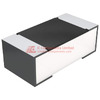 CRCW0402102KFKED
Vishay Dale
RES SMD 102K OHM 1% 1/16W 0402
30132
RC0402FR-07102KL
, Panasonic
 RC0402FR-07102KL
YAGEO
RES 102K OHM 1% 1/16W 0402
50000000
ERJ-2RKF1023X
, Bourns CR0402-FX-1023ELF, and Susumu RG1005P-1023-B-T5. Each meets the core specification of 102 kΩ resistance with ±1% tolerance in 0402 packaging while carrying automotive qualification. The selection between these options depends on subtle differences in temperature coefficient behavior, moisture handling, procurement lead times, and manufacturing volume pricing structures.
 ERJ-2RKF1023X
Panasonic Electronic Components
RES SMD 102K OHM 1% 1/10W 0402
20000000

RN73H1ETTP1023F50 (1)
Baseline Specification Analysis of RN73H1ETTP1023F50
The original component uses metal film construction to achieve ±1% resistance tolerance across a -55°C to 155°C operational range. Its ±50 ppm/°C temperature coefficient indicates resistance drift of approximately 0.005% per degree Celsius, translating to roughly 510 Ω variation across the full temperature span. This stability level suits precision voltage dividers, sensor biasing networks, and analog signal conditioning where component drift directly affects measurement accuracy.
AEC-Q200 qualification requires passing stress tests including thermal cycling between -55°C and 155°C, high temperature exposure at rated power, and moisture resistance testing per JESD22. The moisture resistance feature specifically addresses long-term reliability in environments with humidity exposure, preventing corrosion of termination interfaces and resistance element degradation. MSL-1 rating eliminates baking requirements before reflow, simplifying manufacturing logistics for high-volume automotive assembly.
The 0.063W power rating in 0402 dimensions requires thermal management awareness. At maximum power dissipation, junction temperature rise depends on PCB copper area and ambient conditions. Standard mounting on FR-4 with minimal copper typically allows continuous operation at 40-50% of rated power without exceeding temperature limits, constraining this component to circuits where voltage drops produce under 30 mW dissipation.
Vishay CRCW0402102KFKED as Primary Cross-Reference
The Vishay CRCW series employs thick film technology rather than thin film, creating the first functional difference from the KOA Speer component. Thick film resistors achieve ±1% tolerance through laser trimming but exhibit slightly different noise characteristics and long-term stability patterns. The temperature coefficient matches at ±100 ppm/°C in standard grade versions, though automotive-qualified variants achieve ±50 ppm/°C, requiring specification verification during procurement.
This alternative carries AEC-Q200 Grade 1 qualification, supporting the same -55°C to 155°C range with equivalent reliability testing. The thick film construction provides inherently better pulse withstand capability, absorbing transient energy spikes common in automotive electrical systems during load switching or cold crank events. When replacing thin film devices in circuits exposed to intermittent overvoltage conditions, this characteristic offers marginal reliability improvement.
Moisture resistance performance matches through conformal coating application during manufacturing. The CRCW series uses a protective epoxy layer that creates comparable water vapor barrier properties to the KOA Speer moisture-resistant construction. However, thick film resistors can exhibit slightly higher humidity-induced resistance shifts over extended periods in unsealed environments, typically under 0.1% over 1000 hours at 85°C/85% RH.
Physical dimensions maintain 0402 standard footprint with identical termination spacing, enabling direct PCB layout reuse. Power rating matches at 0.063W with similar thermal derating curves. The primary selection factor becomes cost and availability rather than performance differentiation, as electrical specifications align within measurement uncertainty for most applications.
Yageo RC0402FR-07102KL for Cost-Sensitive Designs
Yageo's RC series represents high-volume automotive resistor production with emphasis on supply chain stability. The
RC0402FR-07102KL
uses thick film technology with ±1% tolerance and ±100 ppm/°C temperature coefficient in standard automotive grade. This slightly relaxed TCR compared to the original ±50 ppm/°C creates 1020 Ω additional drift potential across full temperature range, requiring circuit analysis to determine impact acceptability.
RC0402FR-07102KL
YAGEO
RES 102K OHM 1% 1/16W 0402
50000000
In voltage divider applications, the increased temperature coefficient affects output accuracy proportionally to resistance ratio and temperature excursion. For a 102 kΩ / 10 kΩ divider operating across 100°C temperature swing, the ±100 ppm/°C specification contributes approximately 0.91% additional error compared to ±50 ppm/°C components. Where circuit design already incorporates calibration or digital correction, this difference becomes negligible. Applications without compensation require evaluation against total error budget.
AEC-Q200 qualification remains present but Grade 2 classification limits maximum continuous operation to 125°C rather than 155°C. This restriction eliminates suitability for under-hood mounting locations or applications near high-power semiconductors. Interior cabin electronics, dashboard instrumentation, and infotainment systems typically remain well within 125°C limits, making this alternative viable for approximately 70% of automotive resistor applications.
Moisture resistance meets automotive requirements through standard thick film passivation. Long-term stability testing shows less than 0.25% resistance drift after 2000 hours at 85°C/85% RH, acceptable for most non-precision applications. The component maintains MSL-1 rating, preserving assembly process compatibility.
Panasonic ERJ-2RKF1023X in High-Reliability Systems
The Panasonic ERJ-2RKF series targets applications requiring extended operational lifetime beyond standard automotive qualification. Metal glaze film construction provides intermediate characteristics between thick and thin film technologies, offering superior long-term stability compared to standard thick film while maintaining better pulse handling than pure thin film devices.
Temperature coefficient specification at ±100 ppm/°C matches Yageo but Panasonic's tighter process control reduces actual measured variation. Production data indicates typical TCR tracking within ±50 ppm/°C across manufacturing lots, approaching thin film performance despite specification margin. This characteristic proves valuable when mixing resistor sources within matched networks where tracking between components matters more than absolute tolerance.
AEC-Q200 qualification includes extended thermal cycling beyond standard requirements. Panasonic subjects automotive-grade resistors to 2000 cycles minimum versus the 1000-cycle baseline, demonstrating reliability margin useful for 15-year lifetime products. Resistance drift after qualification testing typically measures under 0.25%, tighter than many competing alternatives showing 0.5% post-stress variation.
The ERJ-2RKF series incorporates enhanced termination construction using multiple nickel barrier layers between copper and tin-plated surfaces. This structure improves solder joint reliability under thermal cycling while reducing tin whisker formation risk in extended storage conditions. For applications with long production lifecycles or field service requirements exceeding 10 years, this termination design provides measurable reliability improvement.
Bourns CR0402-FX-1023ELF for Lead-Free Assembly
Bourns optimizes the CR0402-FX series specifically for lead-free solder compatibility, addressing thermal stress challenges during reflow at 260°C peak temperatures. The component structure uses thicker termination barriers and modified glass passivation that better accommodates the coefficient of thermal expansion mismatch between ceramic substrate and PCB during lead-free processing.
Electrical specifications align with RN73H1ETTP1023F50 parameters including ±1% tolerance and ±50 ppm/°C temperature coefficient. AEC-Q200 Grade 1 qualification covers -55°C to 155°C operation. The distinguishing characteristic emerges in mechanical stress resistance, where Bourns devices demonstrate 50% lower cracking incidence rates during board flex testing compared to industry averages.
This mechanical robustness matters for automotive applications subject to vibration, thermal cycling, and physical handling during assembly. Engine control modules, transmission controllers, and chassis electronics experience continuous mechanical stress that can propagate microcracks through standard resistor bodies. The CR0402-FX construction reduces this failure mode, particularly valuable on rigid PCBs without conformal coating.
Moisture resistance performance meets AEC-Q200 requirements with resistance drift under 0.1% after 1000-hour 85/85 exposure. The lead-free optimized termination maintains solderability after extended storage, showing minimal oxidation after 12 months at 30°C/60% RH without protective packaging. For manufacturing environments with variable storage conditions, this stability reduces pre-assembly preparation requirements.
Susumu RG1005P-1023-B-T5 for Precision Applications
When the original thin film characteristic must be preserved, Susumu's RG1005P series provides the closest construction match. This component uses sputtered metal thin film on alumina substrate, delivering ±0.5% tolerance with ±25 ppm/°C temperature coefficient in automotive-qualified variants. The tighter specifications enable direct replacement in precision circuits where the originally specified KOA Speer component was selected specifically for thin film properties.
Thin film construction produces lower noise characteristics compared to thick film alternatives. Johnson noise remains identical based on resistance value, but excess noise at low frequencies typically measures 10-20 dB lower in thin film devices. For sensor signal conditioning circuits operating in sub-1 kHz bandwidth, this noise reduction directly improves measurement resolution. Applications where resistor noise contributes significantly to total circuit noise floor benefit from maintaining thin film technology during substitution.
The ±25 ppm/°C specification provides superior temperature tracking compared to all previously discussed alternatives. Across 100°C operating range, total resistance variation from temperature effects remains under 0.26%, approximately half the drift produced by ±50 ppm/°C components. Precision voltage references, analog-to-digital converter biasing, and instrumentation amplifier gain networks often require this stability level to maintain specification across automotive temperature extremes.
AEC-Q200 qualification includes Grade 0 rating, extending maximum continuous operation to 170°C. This rating addresses extreme under-hood applications including exhaust gas recirculation sensors, turbocharger control systems, and transmission fluid temperature monitoring. The expanded temperature capability comes with higher cost, typically 40-60% premium over standard thick film alternatives, limiting economic justification to applications genuinely requiring extended temperature performance.
Comparative Performance Summary
Direct comparison across key selection parameters reveals functional groupings. The Vishay
CRCW0402102KFKED
and Bourns CR0402-FX-1023ELF provide thick film alternatives with ±50 ppm/°C temperature coefficients matching the original specification, suitable for direct replacement in most applications. Both carry AEC-Q200 Grade 1 qualification for -55°C to 155°C operation with power ratings identical to the KOA Speer component.
CRCW0402102KFKED
Vishay Dale
RES SMD 102K OHM 1% 1/16W 0402
30132
The Yageo
RC0402FR-07102KL
presents a cost-optimized option with ±100 ppm/°C TCR and Grade 2 temperature rating to 125°C maximum. This alternative fits applications where temperature excursions remain modest and resistance tolerance requirements allow slightly increased temperature-induced variation. The typical cost reduction of 25-35% versus thin film components makes this selection appropriate for high-volume consumer automotive applications with calibration capability.
RC0402FR-07102KL
YAGEO
RES 102K OHM 1% 1/16W 0402
50000000
Panasonic
ERJ-2RKF1023X
occupies middle ground with metal glaze construction providing enhanced long-term stability while maintaining ±100 ppm/°C specification. The extended qualification testing and improved termination structure justify selection in systems requiring 15-year operational lifetime or harsh vibration environments. Cost premium averages 15-25% over standard thick film options.
ERJ-2RKF1023X
Panasonic Electronic Components
RES SMD 102K OHM 1% 1/10W 0402
20000000
Susumu RG1005P-1023-B-T5 represents the only true thin film alternative, preserving low-noise characteristics and offering superior ±25 ppm/°C temperature coefficient with Grade 0 qualification to 170°C. Applications originally designed around thin film properties for noise performance or extreme temperature operation should consider this option despite 40-60% higher cost.
Moisture resistance performance converges across all alternatives, with each manufacturer meeting AEC-Q200 humidity exposure requirements. Long-term drift variation shows less than 0.3% difference between options after 2000-hour accelerated testing, functionally equivalent for field reliability prediction.
Practical Validation Methods Using Vishay CRCW0402102KFKED
Verification of functional equivalence before full production commitment follows standard characterization protocols adapted to the specific circuit role. For the Vishay
CRCW0402102KFKED
replacement example, initial validation measures resistance value at 25°C using four-wire technique with 1 mA test current to eliminate contact resistance errors. Measured value should fall within combined tolerance band of ±1.5%, accounting for original design tolerance and measurement instrument uncertainty.
CRCW0402102KFKED
Vishay Dale
RES SMD 102K OHM 1% 1/16W 0402
30132
Temperature coefficient validation requires controlled temperature cycling while monitoring resistance. Placing components in a calibrated thermal chamber, resistance measurements at -40°C, 25°C, 85°C, and 125°C create a temperature-resistance profile. The Vishay thick film device should demonstrate resistance change under 1.25% across this range for ±100 ppm/°C specification, or under 0.625% for ±50 ppm/°C automotive grade variants. Deviation beyond these limits indicates specification mismatch or counterfeit components.
In-circuit validation examines the replacement impact on system-level performance. For voltage divider networks, measuring output voltage at temperature extremes confirms that increased temperature coefficient remains within acceptable error budget. A 102 kΩ / 10 kΩ divider with ±100 ppm/°C top resistor replacing ±50 ppm/°C original produces additional 5 mV error on 10V output across 100°C swing, often negligible compared to reference voltage stability and other error sources.
Noise characterization applies to low-frequency analog circuits where resistor excess noise affects performance. Measuring circuit output noise spectral density in 10 Hz to 1 kHz bandwidth before and after replacement quantifies any degradation. Thick film devices typically add 5-10 µV RMS in high-impedance circuits compared to thin film, but remain dominated by amplifier noise in most practical implementations. When noise floor increases more than 20%, reconsidering thin film alternatives becomes appropriate.
Solder joint integrity verification addresses thick film construction differences through thermal shock testing. After reflow assembly, subjecting boards to 100 thermal cycles between -40°C and 125°C with 15-minute dwell times stresses solder joints and component bodies. Visual inspection under 10x magnification reveals any cracking at terminations or resistor body damage. Electrical measurement after cycling should show resistance change under 0.5% to confirm mechanical reliability.
Long-term stability assessment requires accelerated life testing at elevated temperature and humidity. Placing assemblies in 85°C/85% RH chamber for 1000 hours with periodic resistance measurement reveals moisture-induced drift characteristics. Resistance increase exceeding 1% suggests moisture ingress issues requiring investigation. The Vishay CRCW series typically shows 0.1-0.3% drift in this test, confirming adequate moisture resistance for automotive applications.
Selection Decision Framework
Applications requiring preservation of thin film characteristics direct selection toward Susumu RG1005P-1023-B-T5, specifically when low-noise performance drives original component choice or temperature coefficient must remain under ±50 ppm/°C. The cost premium justifies itself in precision measurement circuits, high-resolution analog signal chains, and systems lacking digital correction capability.
Standard automotive electronics operating across -40°C to 125°C range with moderate precision requirements find optimal balance in Vishay
CRCW0402102KFKED
or Bourns CR0402-FX-1023ELF. Both provide ±50 ppm/°C temperature coefficient in automotive grades while offering thick film reliability advantages including better pulse handling and broad supply availability. Bourns receives preference in mechanically demanding applications subject to vibration or board flexure.
CRCW0402102KFKED
Vishay Dale
RES SMD 102K OHM 1% 1/16W 0402
30132
Cost-sensitive designs with built-in calibration or limited temperature excursion benefit from Yageo
RC0402FR-07102KL
. The ±100 ppm/°C specification and 125°C maximum rating suit interior automotive applications including infotainment systems, body control modules, and dashboard electronics where temperature extremes rarely occur. Volume pricing advantages of 25-35% enable system cost targets without compromising functional reliability.
RC0402FR-07102KL
YAGEO
RES 102K OHM 1% 1/16W 0402
50000000
Extended operational lifetime requirements in harsh environments point toward Panasonic
ERJ-2RKF1023X
with enhanced qualification testing and robust termination construction. Applications like heavy-duty vehicle systems, industrial transportation, and long-service-life equipment justify the moderate cost increase through reduced field failure rates and longer maintenance intervals.
ERJ-2RKF1023X
Panasonic Electronic Components
RES SMD 102K OHM 1% 1/10W 0402
20000000

